Products
Case studies
Industries
Resources
I’m an Influencer
15 min read


Table of Contents
Flowbox alternatives rarely cover the full scope of what the platform does. That is the first thing to understand before evaluating their competitors. They usually solve a specific problem: generating more content through paid collaborations with influencers, launching a loyalty programme, managing product reviews, or getting UGC galleries onto their eCommerce pages.
This guide breaks down the categories where partial alternatives exist, explains what each tool does well, and clarifies where the gaps appear when you compare them against a comprehensive UGC and influencer marketing suite.
If you need a specific capability rather than a complete platform, one of these tools may be a good fit. If you need the full picture—content generation and collection, creator collaboration, rights management, shoppable content, multi-channel distribution, and performance analytics—that is exactly what Flowbox is built for.
Although this guide is detailed and comprehensive, here are the key takeaways from the market research on Flowbox alternatives:
Keep these points in mind as you read through each category below. They explain why brands searching for a Flowbox alternative often end up evaluating several tools for managing user-generated content, and why the comparison rarely results in a like-for-like match.
User-generated content is a strategy, not a campaign tactic. Brands that treat UGC management as an occasional social media post are falling behind those that systematically collect, moderate, and distribute authentic content across every customer touchpoint, from product pages to paid ads to email campaigns.
UGC platforms have split into two distinct categories. On one side, you have content curation platforms that aggregate existing social content from customers and communities. On the other, you have creator marketplaces that connect brands with freelance creators or influencers to produce custom video and photo assets for the brand.
A complete UGC strategy requires both, plus the ability to manage influencer relationships and activate content at scale.
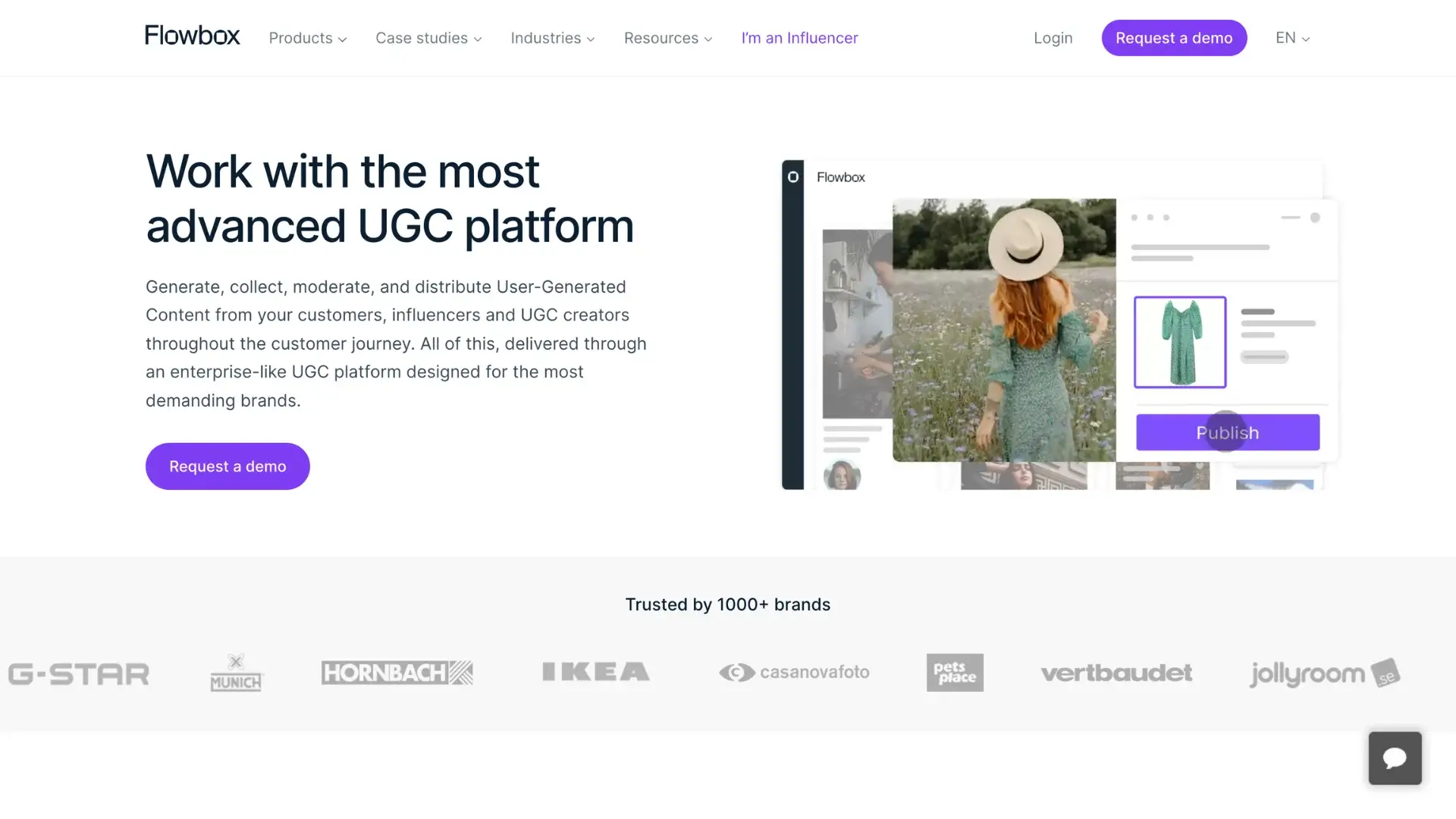
Headquartered in Sweden with regional offices in Spain, Denmark, and the Netherlands, Flowbox UGC platform approaches it as a full lifecycle: generate, collect, moderate, distribute, and measure. Your customers are already posting about your products. Influencers are ready to collaborate and promote your brand. Flowbox automatically picks up that content from Instagram, TikTok, Facebook, Pinterest, Twitter, and YouTube.
You approve what fits your brand, connect it to the right products, and distribute it to different channels. What distinguishes Flowbox from point solutions is the depth of distribution. Content does not sit in a gallery widget. You can repurpose it across every customer touchpoint: social ads, post-purchase emails, newsletters, abandoned cart emails, inspirational blog posts, and even in-store screens.
For brands managing large product catalogues across multiple countries and domains, this matters. Flowbox’s architecture handles multi-domain, multi-country, and multi-currency environments, a requirement for enterprise brands that most lightweight tools cannot meet.
If your primary need is to aggregate and display social content on your website, several platforms operate in this space. Here is where they focus and where gaps emerge for brands that need more than curation.
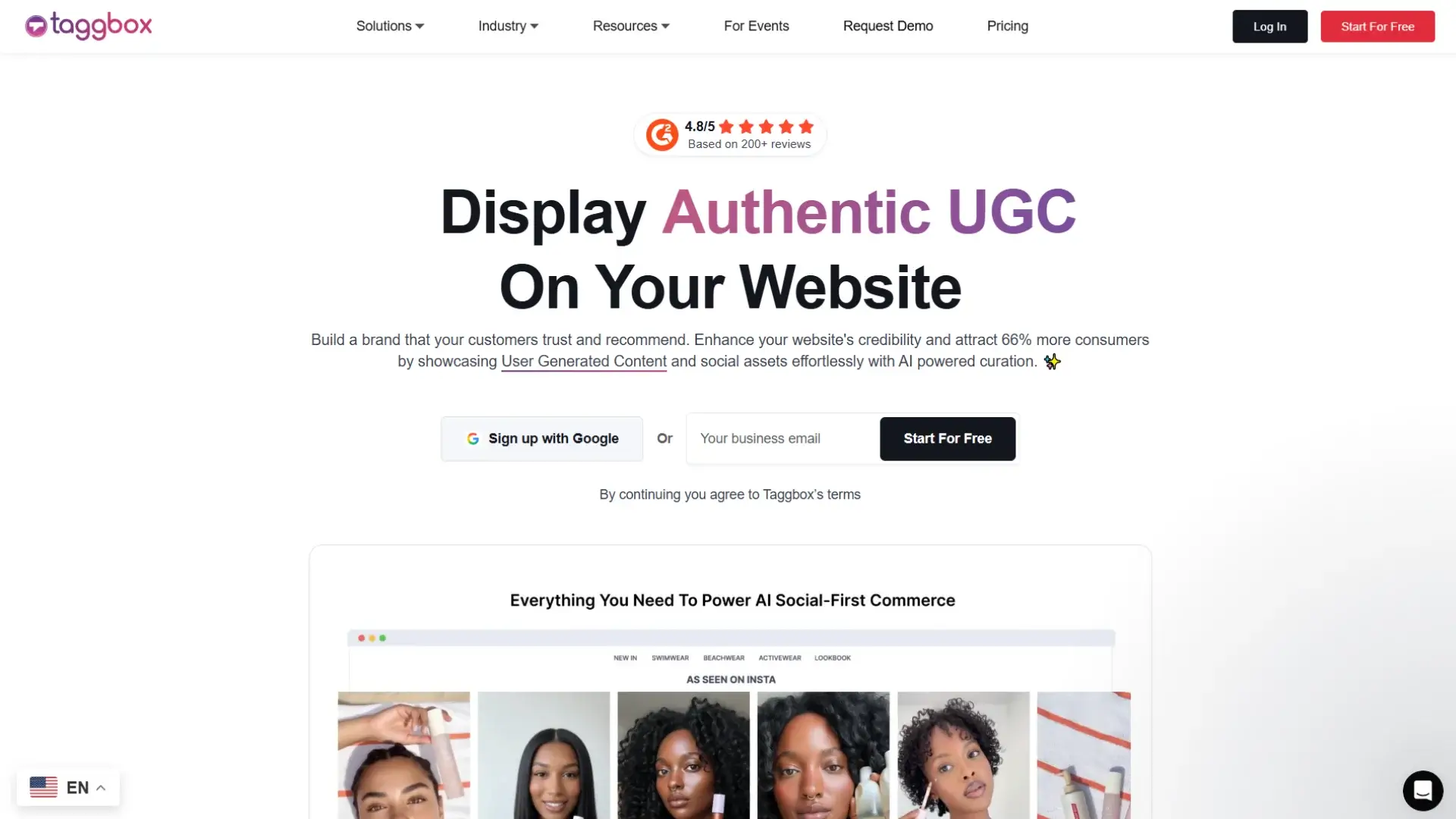
Taggbox is a social media aggregator and UGC suite focused on collecting and displaying social content through embeddable widgets and social walls. Headquartered in India, the platform supports content collection from major social networks and offers customisable templates for embedding the content on website pages.
Where it fits: Taggbox works well for brands that need to collect and embed content across different channels. It covers the “collect and display” portion of UGC.
What it does not cover: Taggbox does not include influencer marketing tools for collaborating with influencers or building an ambassador programme. Brands that need a high volume of content generation would be limited by the existing stream of community content, and to manage creator relationships, they will need additional tools.
Bazaarvoice is the legacy enterprise platform for sampling, ratings and reviews, and visual UGC. Headquartered in Austin, Texas, Bazaarvoice operates one of the largest retail syndication networks globally, distributing product reviews across thousands of brand and retailer websites. It’s one of the most extensive platforms and a strong alternative to Flowbox.
Where it fits: Bazaarvoice offers extensive capabilities in UGC, sampling, social media management, and ratings and reviews. Bazaarvoice is the standard for eCommerce UGC syndication to major retailers. If your primary channel is wholesale retail and you need reviews syndicated across those networks, Bazaarvoice has a near-monopoly in that space.
What it does not cover: Bazaarvoice’s primary focus is on the US, UK, and Australia, not the EU. While the company does operate in the EU, the region is comparatively more complex—particularly due to stricter data and compliance requirements. European brands should choose a platform that is more aligned with EU data protection regulations and better adapted to multilingual, localised support.
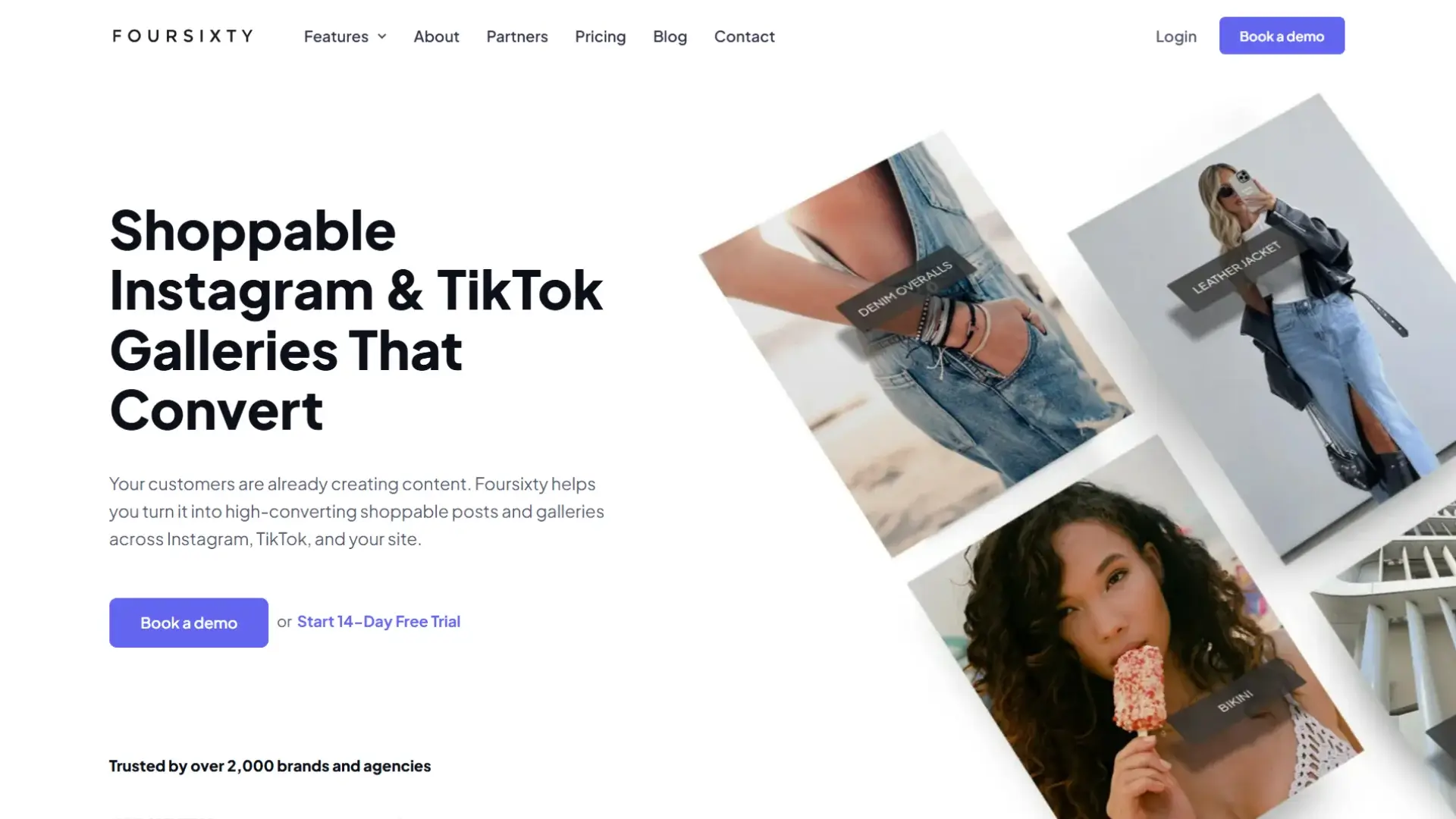
Foursixty is a Canadian platform specialising in shoppable galleries for eCommerce websites. The tool pulls content from Instagram and TikTok, allowing brands to tag products directly within user-submitted photos and showcase them on website pages and email campaigns.
Where it fits: Foursixty works for eCommerce-centric brands that want a quick integration to display shoppable galleries on their website pages.
What it does not cover: Foursixty is limited to Instagram and TikTok as sources and to the website and email as destinations. It does not support multi-channel content distribution, influencer management, ratings and reviews, or enterprise-grade features like multi-domain support. For brands operating across multiple social platforms and distribution channels, Foursixty addresses only a fraction of the UGC workflow.
Influencer marketing has matured from celebrity endorsements into a structured, data-driven discipline. Now, the most effective brands build long-term brand ambassador communities rather than running one-off sponsored posts.
This shift requires platforms that manage ongoing creator relationships, track campaign performance, handle payments and compliance, and connect influencer-generated content back into the broader UGC pipeline.
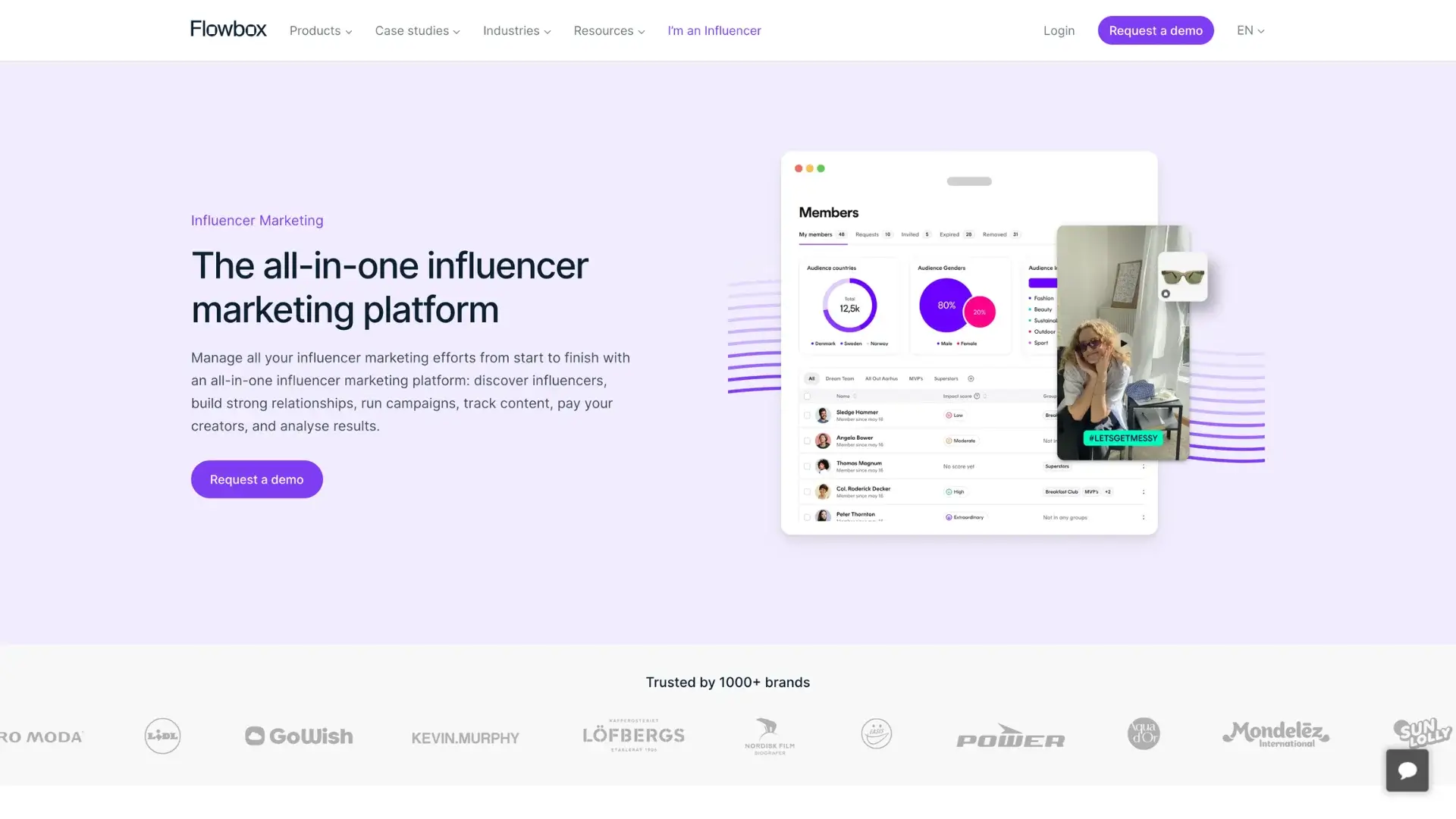
Flowbox’s influencer marketing capabilities take a community-first approach. Rather than offering a one-time influencer database search, Flowbox helps brands build dedicated influencer teams who become ongoing brand ambassadors.
The Verified Influencers tool gives brands a starting point for discovery, while the Global Search tool extends reach further to find creators beyond the marketplace pool, and the AI matchmaking tool helps discover creators that fit your brand.
Your marketing team creates campaigns with custom briefings, hashtag tracking, deadlines, and guidelines. Content posted by your influencers and ambassadors is automatically tracked and collected into a central library. Built-in payment systems and DAC7 compliance handle the operational complexity of paying creators across the EU.
The strategic advantage is the connection between influencer marketing and UGC management. Content generated by influencers does not live in a separate silo; it flows into the same platform where customer content is collected, moderated, and distributed.
If your specific need is influencer discovery or campaign management, several dedicated platforms operate in this space. Each excels at one aspect of influencer marketing, but none connects back to a UGC management and distribution engine.
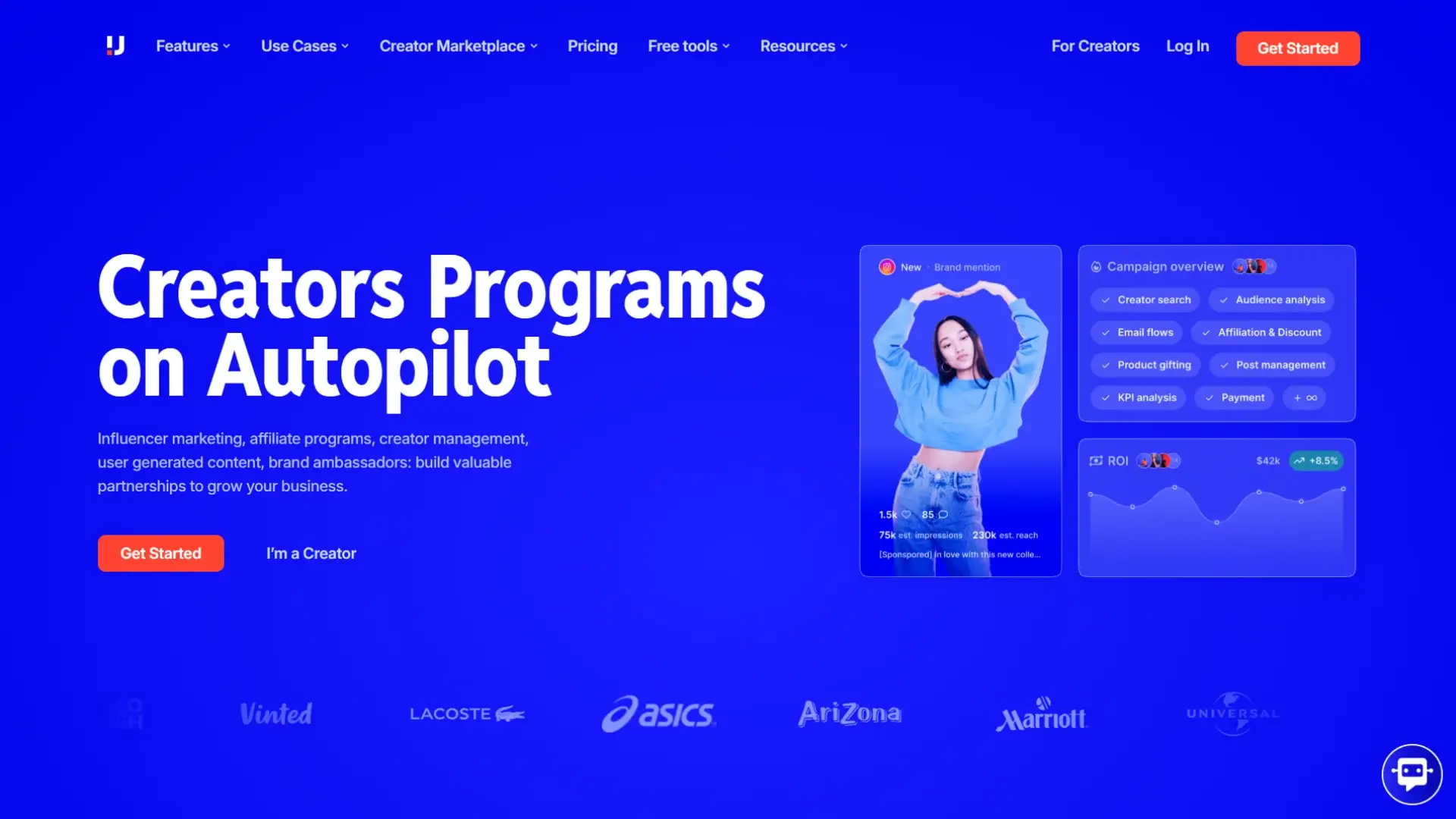
Upfluence is a US-based, AI-powered influencer marketing platform offering a large influencer database, campaign management, and automated product seeding tools. The platform provides detailed audience analytics and integrates with major eCommerce platforms for tracking sales attributed to influencer campaigns.
Where it fits: Upfluence is strong for brands focused on influencer discovery and performance tracking, particularly those running affiliate-style programmes where direct sales attribution matters.
What it does not cover: Upfluence does not include UGC collection from organic customer content, shoppable gallery widgets, media rights management for customer-generated content, or multi-channel UGC distribution. Influencer content lives within the Upfluence ecosystem and does not flow into a broader content pipeline.
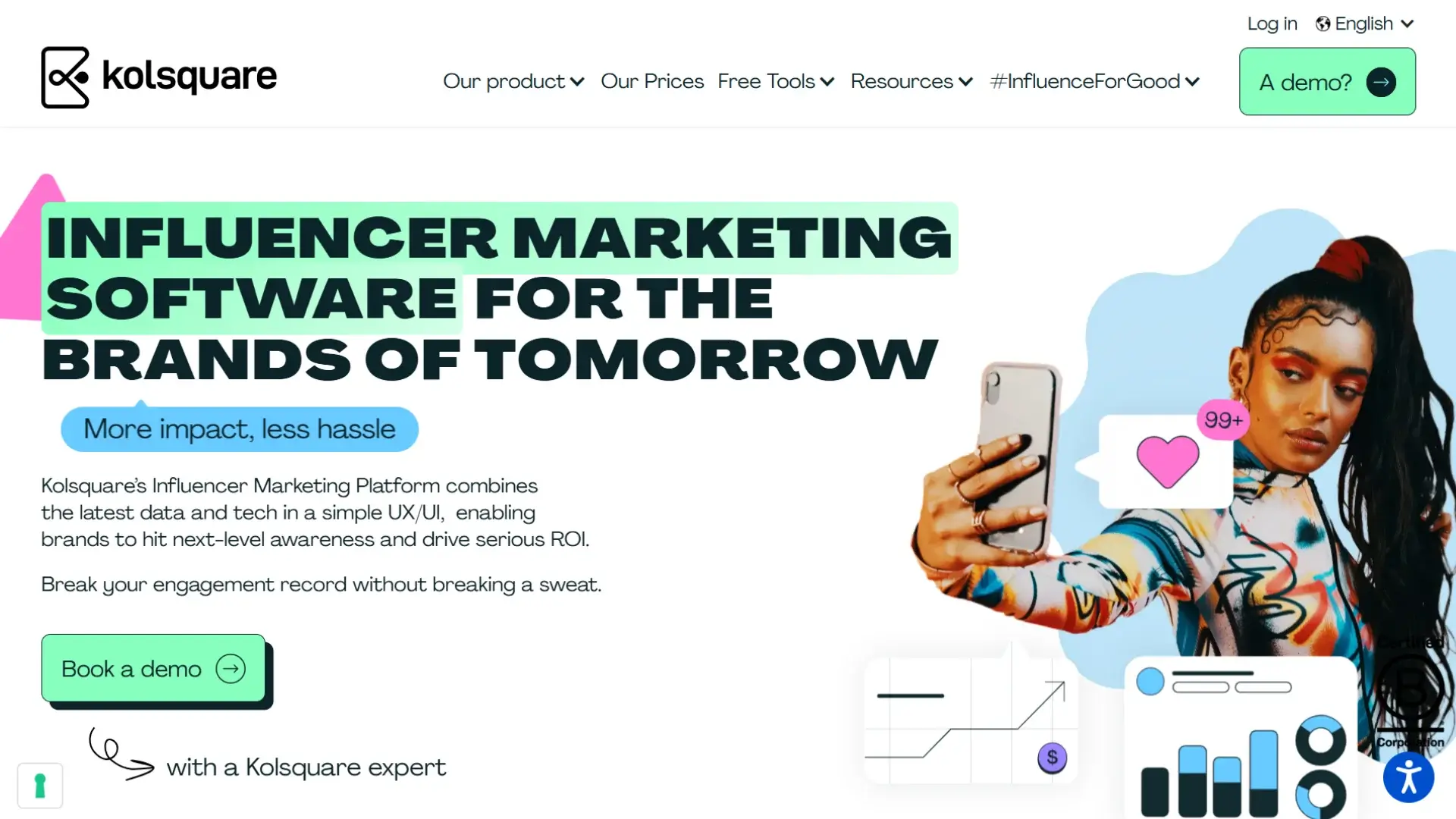
Kolsquare is a French influencer marketing platform focused on the European market. It offers influencer search, relationship and campaign management, and compliance tools built with European regulations in mind. The platform provides audience credibility scoring to help brands avoid fraudulent followers.
Where it fits: Kolsquare is a solid choice for European brands that need influencer discovery with strong audience verification and GDPR-aware workflows.
What it does not cover: Kolsquare is purely an influencer marketing tool. It does not manage customer UGC, provide shoppable content widgets, offer ratings and reviews, or distribute content across eCommerce touchpoints. Brands still need a separate platform for their organic UGC operations.
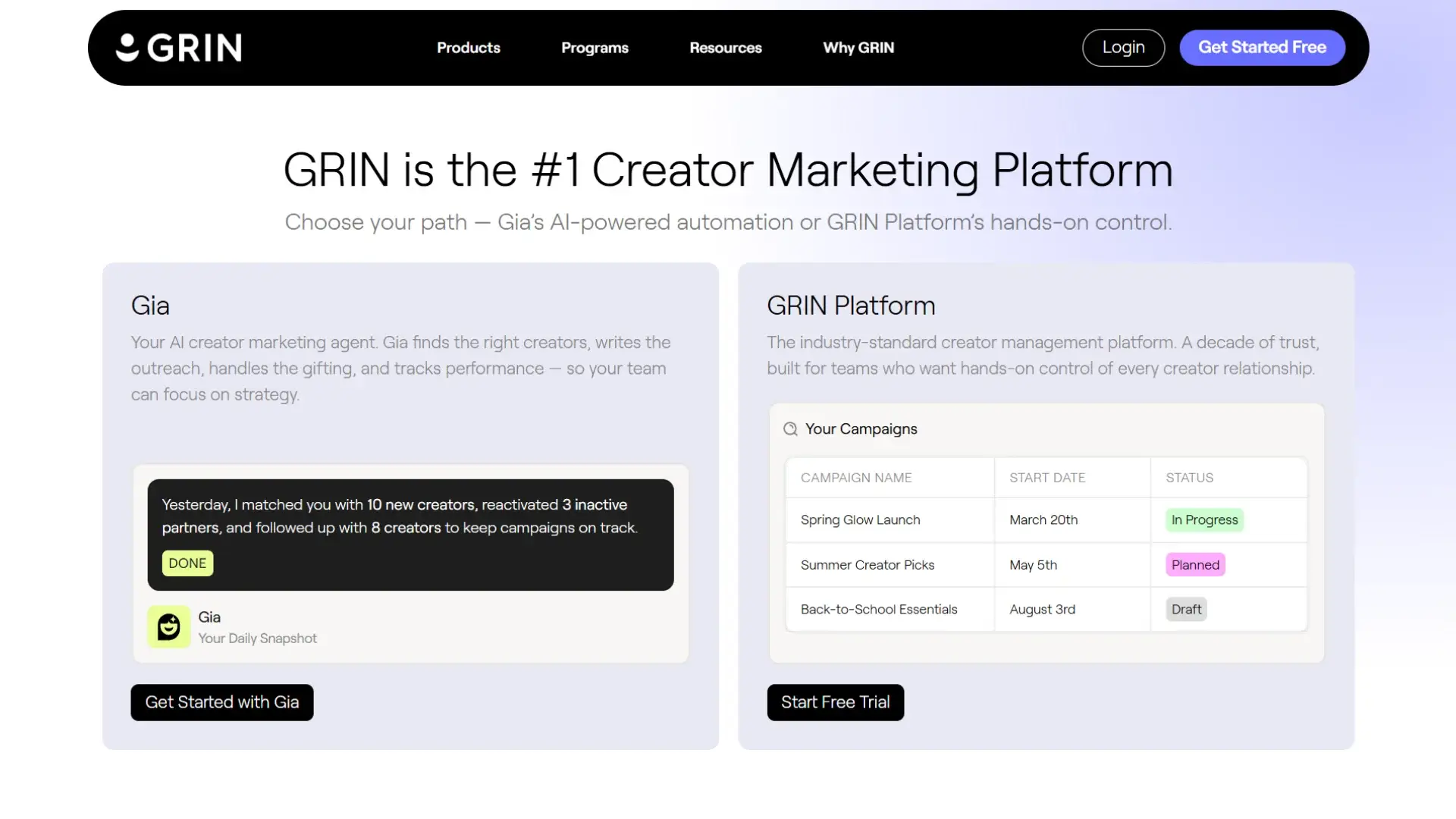
Grin positions itself as an AI-powered creator management platform, primarily serving the US market. The platform focuses on relationship management with creators, including product seeding, contract management, content tracking, and detailed ROI reporting.
Where it fits: Grin works well for DTC brands running large-scale influencer marketing programmes who need detailed relationship management and revenue attribution at the creator level.
What it does not cover: Grin does not collect or manage organic customer UGC. It does not provide on-site shoppable galleries, product-level content linking, or multi-channel content distribution. Grin is built for managing paid creator relationships, not for operating a comprehensive UGC and content strategy.
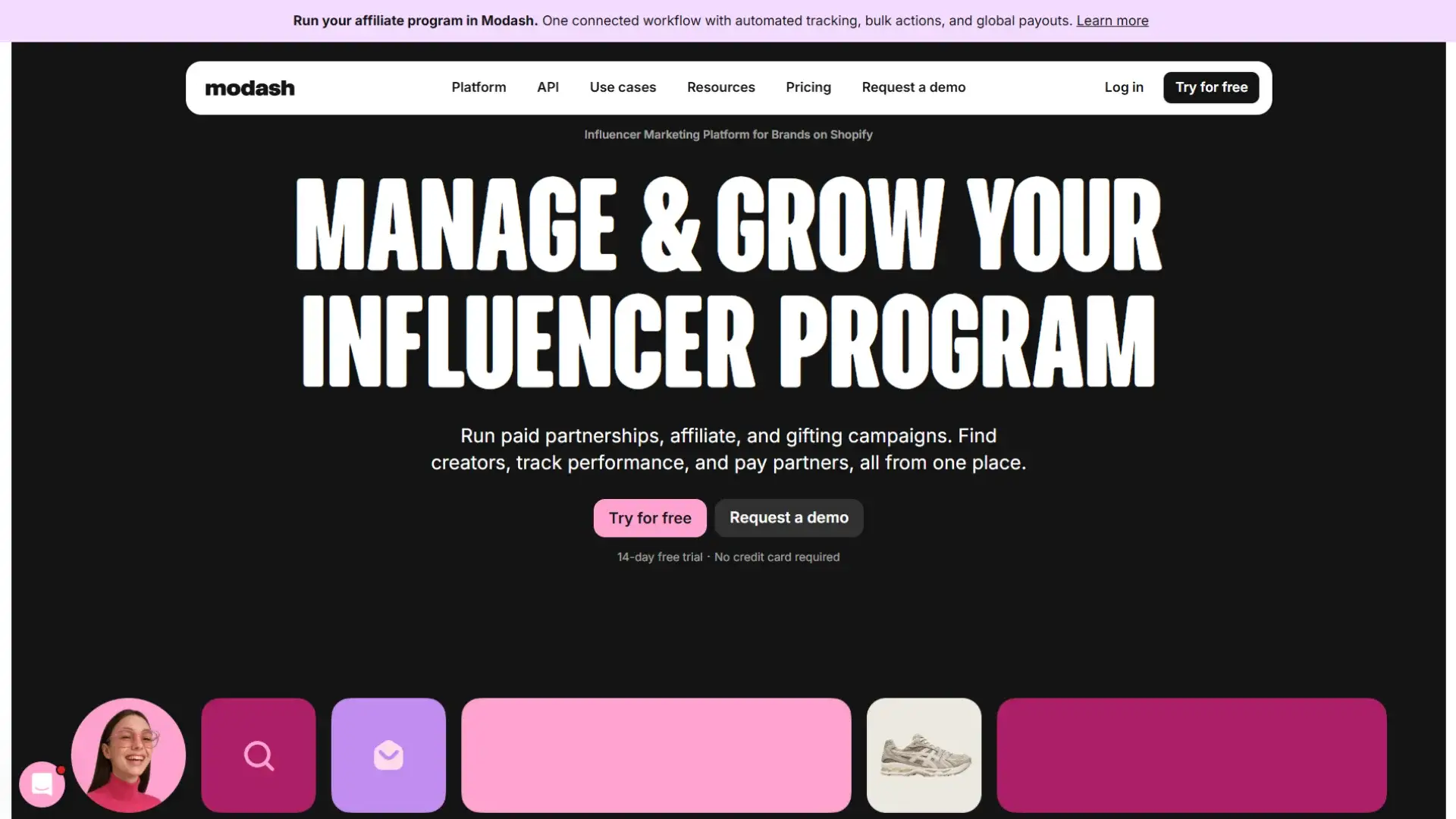
Modash is an influencer discovery and analytics tool headquartered in Estonia, but also operating across Europe and Canada. The platform helps brands find creators, manage relationships, track performance, and pay them in one connected workflow.
Where it fits: Modash is useful for teams running affiliate programs, paid partnerships, and gifting campaigns.
What it does not cover: Modash is primarily an influencer marketing tool. It does not help to manage the ongoing UGC collection or distribution workflow. Brands using Modash still need a separate platform for campaign execution and content operations.
A growing segment of the market focuses on connecting brands with freelance content creators who produce custom video and photo assets, primarily for UGC-style ads on TikTok, Instagram Reels, and Facebook. These platforms solve a specific problem: generating fresh ad creative content that the brand can own and repurpose.
Flowbox’s influencer marketing platform includes its own creator marketplace with access to 18,000+ verified creators. Brands can filter by niche, audience, and content style, and send direct invitations to creators to join their team. On top of the marketplace, a global search tool expands discovery further, helping brands find additional creators beyond the verified pool and evaluate their fit before reaching out.
The difference between Flowbox’s approach and standalone creator marketplaces is what happens after you connect. Creators who accept your invitation become part of your brand’s dedicated team inside the platform. From there, you manage the full relationship: assign campaigns with custom briefings, track content automatically, communicate through a built-in inbox, handle payments, and collect every piece of content they produce into your central library.
This means creator discovery and content production are not isolated transactions. Every asset a creator produces feeds directly into Flowbox’s UGC management pipeline, where it can be moderated, linked to products, and distributed across your website, emails, ads, and every other touchpoint. No export and re-upload needed.
Standalone creator marketplaces focus specifically on connecting brands with freelancers for content production. They excel at pairing brands with vetted creators who produce short-form video content. The output looks authentic, performs well in paid social environments, and can be produced at scale with relatively low per-unit cost.
These platforms are not, however, UGC management systems. They do not collect organic customer content. They do not help moderate and distribute that content across customer-journey touchpoints, manage ongoing influencer communities or handle product reviews.

Influee operates as a UGC creator marketplace connecting brands with over 100,000 creators across 24 countries. The platform focuses on helping brands outsource short-form video content for paid social campaigns, with AI-driven tools for scriptwriting and creator matching.
Where it fits: Influee is strong for brands running multi-market paid social campaigns that need high-volume creator content at transparent pricing. The large creator network makes it particularly useful for localised campaigns.
What it does not cover: Influee helps outsource custom creator content for ads. It does not collect organic customer UGC, provide on-site shoppable galleries, manage brand ambassador communities, or offer ratings and reviews functionality.
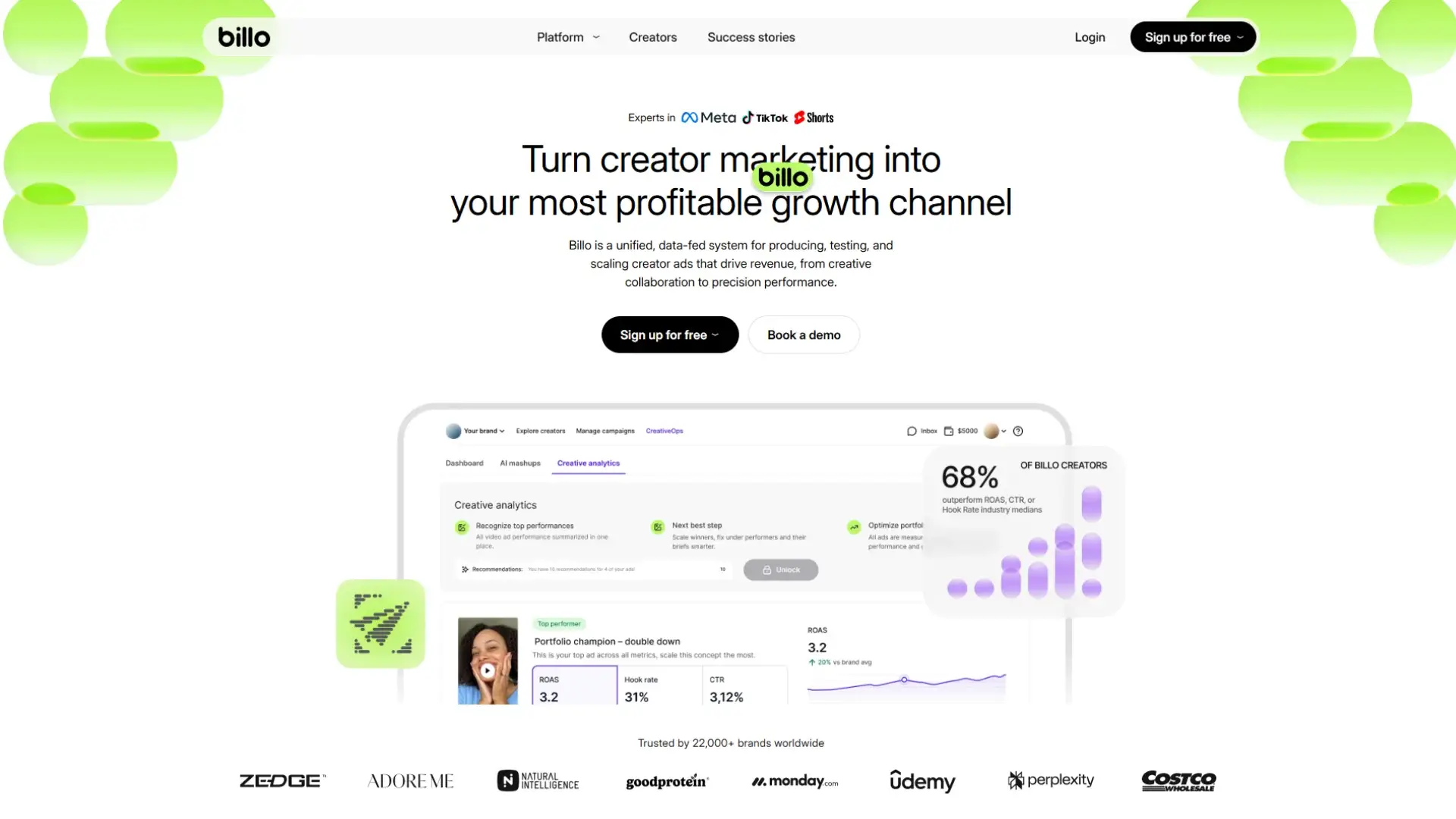
Billo is a self-service marketplace for UGC-style video ads. The platform helps brands hire real, vetted creators and manage collaborations. They also offer optional services like organic posting, paid ad partnerships, and expert editing.
Where it fits: Billo suits performance marketing teams that need a high volume of short-form video ad creatives with minimal project management overhead.
What it does not cover: Billo is an ad creative production tool. It does not handle customer UGC collection, content moderation, product linking, eCommerce integration, influencer community building, or reviews.
Product reviews remain one of the most powerful conversion drivers in eCommerce. Research consistently shows that shoppers read reviews before making purchasing decisions, and products with reviews convert at significantly higher rates than those without. However, review collection and management are distinct disciplines from visual UGC and influencer marketing.
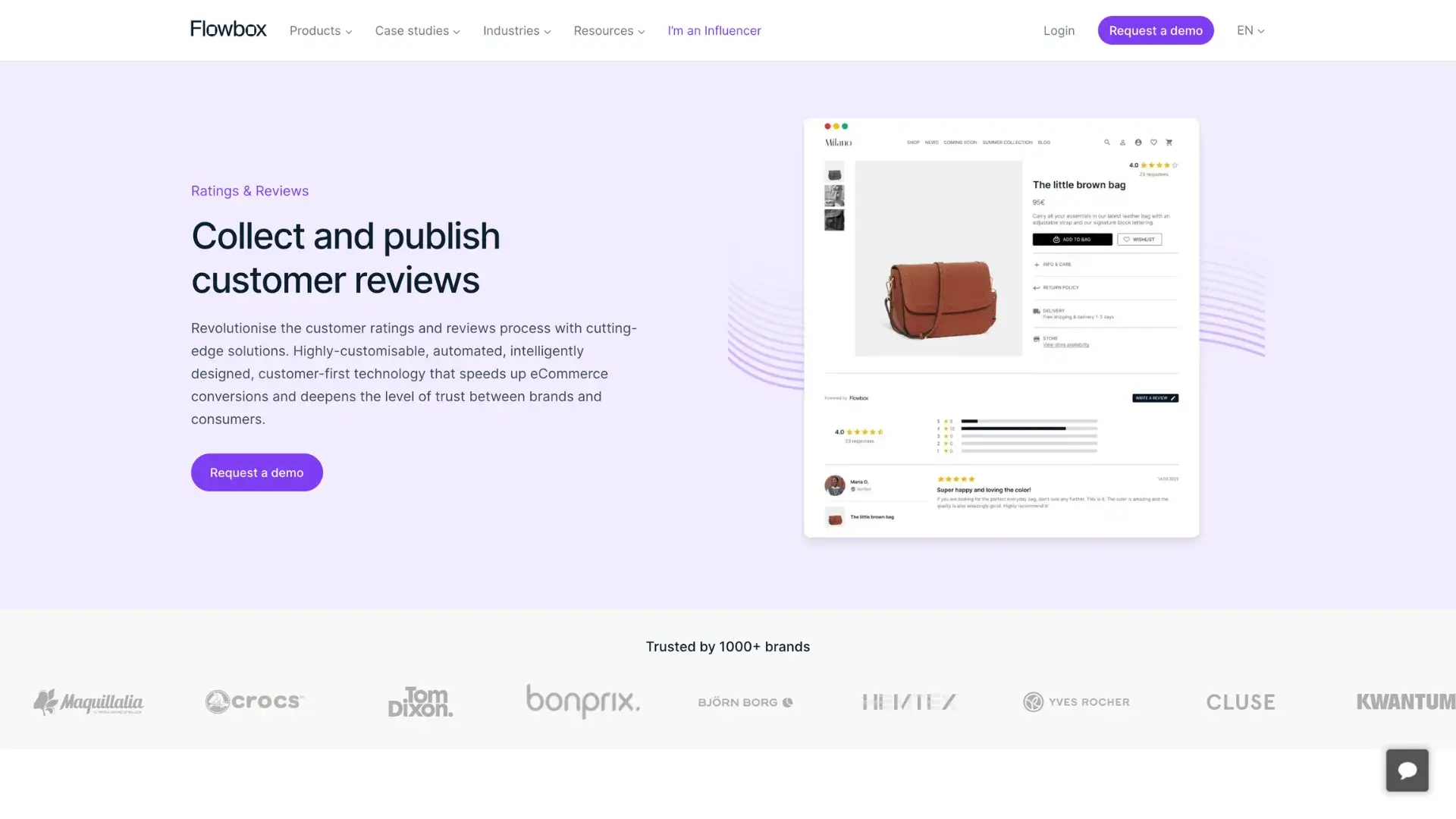
Flowbox offers Ratings & Reviews as a complementary product alongside its UGC and influencer marketing platforms. Brands can capture product reviews, moderate them, and display them on product pages, all within the same ecosystem where visual UGC and influencer content are managed.
The advantage is operational simplicity. Your UGC (whether it is an Instagram photo, a TikTok video, or a product review) lives in one platform. Your team uses one dashboard. Your analytics show the full picture of community-generated content performance.
If product reviews are your primary or sole focus, dedicated review platforms offer greater depth in this specific area.
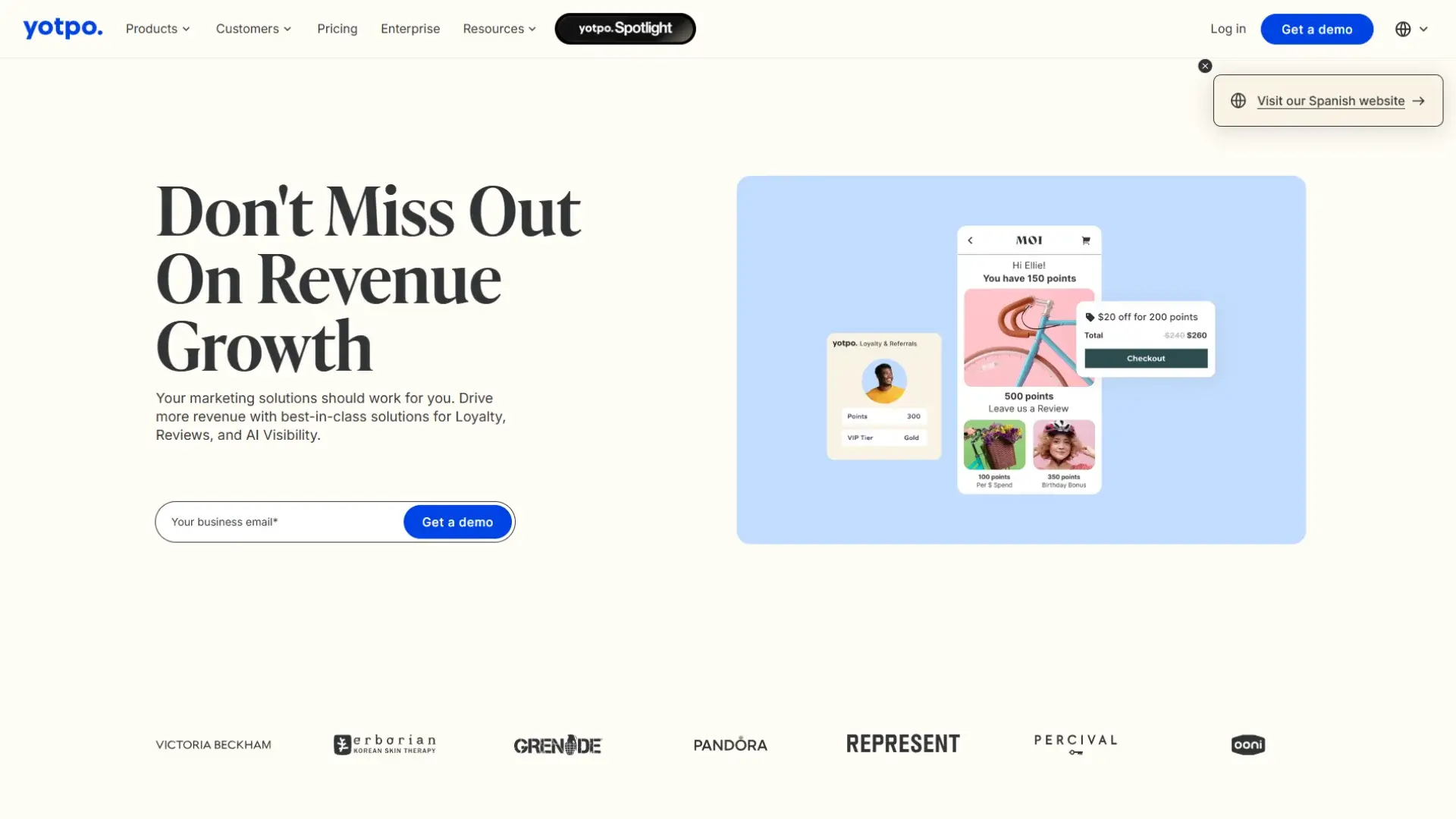
Yotpo, headquartered in Israel and with seven offices worldwide, is an eCommerce marketing platform focused on reviews and loyalty programmes. The platform provides AI-powered review collection, smart prompts that encourage detailed product feedback, and syndication to Google Shopping, TikTok Shop, Facebook, and retail partners.
Where it fits: Yotpo is strong for eCommerce brands seeking review collection with AI-driven features such as sentiment analysis and smart review prompts, review syndication, and a loyalty and referrals programme management tool.
What it does not cover: Yotpo does offer visual UGC capabilities alongside its reviews product, but its primary strength remains review collection, loyalty, and syndication. The platform does not include influencer marketing campaign tools, creator community management, or the same depth of multi-channel content distribution across ads, emails, socials, and in-store screens. Brands that need a full UGC pipeline will likely still need additional tools in addition to Yotpo.
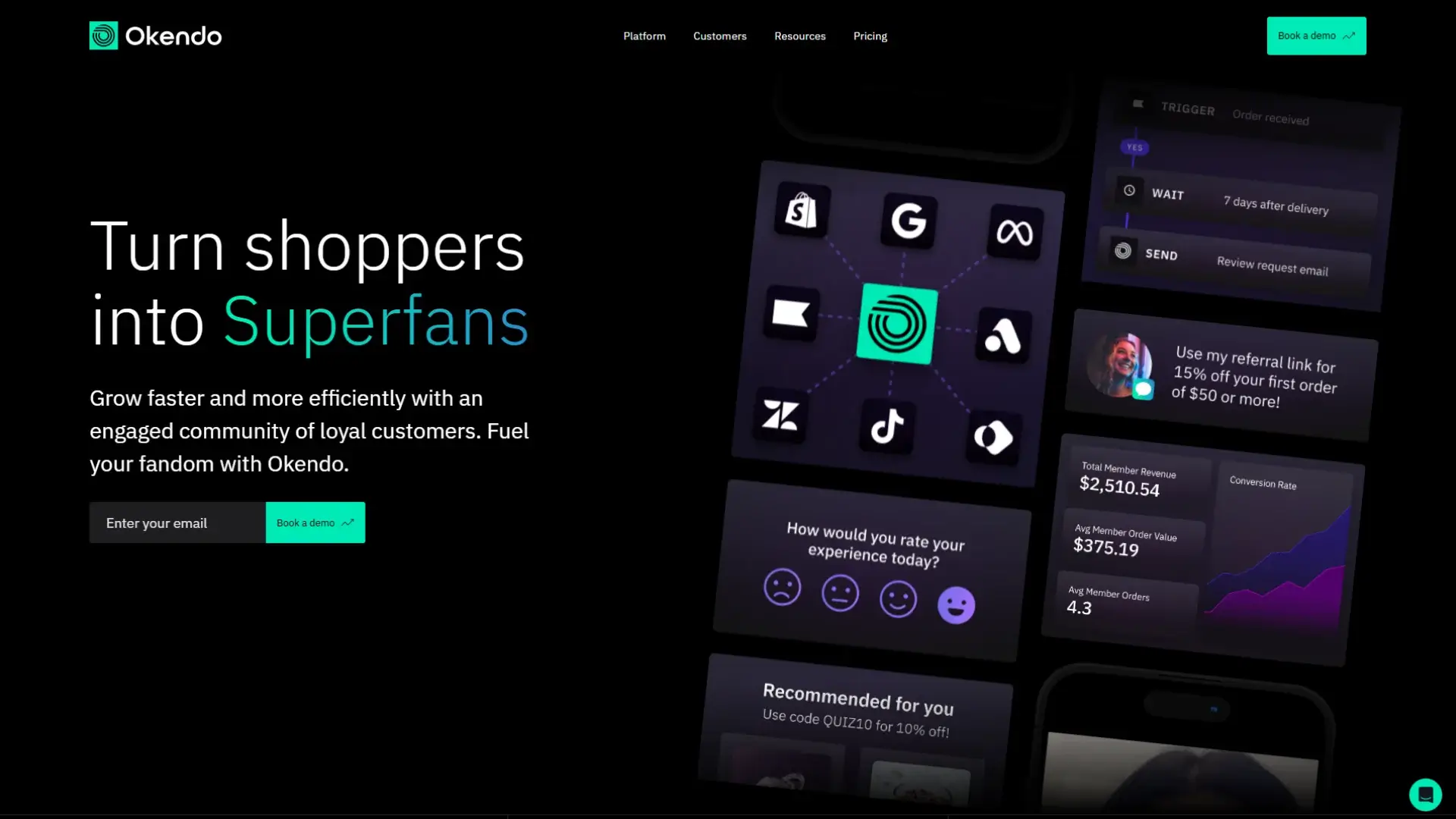
Okendo, headquartered in Australia, focuses on product reviews with a strong emphasis on customer attributes, allowing shoppers to rate specific product characteristics such as fit, quality, or skin-type compatibility. The platform integrates tightly with Klaviyo and the broader Shopify ecosystem.
Where it fits: Okendo suits brands that benefit from attribute-based review data and from referrals and loyalty programmes based on perks, points and exclusives.
What it does not cover: Okendo does not provide visual UGC collection from social media at scale, influencer marketing tools, or multi-channel content distribution.
User-generated content is fragmented into specialised tools: visual UGC, ratings and reviews, influencer marketing, each covering one dimension of what a comprehensive content strategy requires.
After analysing the market, we conclude that Flowbox has no direct alternative. No other European company offers the three key areas of UGC management (visuals, reviews and influencer marketing) on a single unified platform, with a centralised content library and multi-channel distribution capabilities.
In addition to the software, Flowbox offers localised customer success services supporting European brands in 8+ languages.
A brand trying to replicate Flowbox’s capabilities with point solutions might stitch together a UGC curation tool, an influencer marketing platform, a creator marketplace, and a review solution.
That creates four vendor relationships and contracts, four dashboards, and four integration projects, with no unified content library and no way to measure the combined impact of customer content, influencer content, and reviews on revenue.
Flowbox solves this by design. UGC management, influencer marketing, and ratings & reviews are combined in one solution, adapted to the brand’s evolving needs.
The content your customers create, the content your influencers produce, and the reviews your shoppers write all flow through the same system: collected, moderated, distributed and analysed to measure how they drive results.
Flowbox is a Swedish company with over 10 years in the market and regional offices in Spain, Denmark, and the Netherlands, a footprint that reflects its commitment to serving European brands with local expertise. GDPR compliance is not an afterthought or a regional feature toggle; it is embedded in how data is collected, stored, and processed.
For European brands operating under strict privacy regulations, this matters more than any feature checklist. Many alternative platforms treat GDPR as a compliance checkbox rather than a design principle.
Flowbox operates as a strategic partner for the brands it works with. Multilingual support, expert-led onboarding, and ongoing advisory are standard.
After working with 1,000+ brands across 40+ markets, including IKEA, Decathlon, G-Star, Porcelanosa, Andrew Martin, and Project X Paris, the Flowbox team brings operational knowledge that a self-service tool cannot replicate.
The difference shows most in complex implementations for mid to enterprise brands: multi-domain setups, multi-country rollouts, integration with enterprise eCommerce platforms or custom webshops, and content strategies that span paid, owned, and earned channels simultaneously.
Before choosing a tool, define what you are actually trying to solve. The right platform depends on your specific use case, not on a generic feature comparison.
| Your primary need | Category to evaluate | Dedicated tools | Covered by Flowbox |
| Collect and display customer photos and videos on your website | UGC collection and repurposing | Taggbox, Foursixty | Yes — core UGC platform |
| Find, manage, and collaborate with influencers | Influencer marketing | Upfluence, Kolsquare, Grin, Modash | Yes — integrated influencer platform |
| Produce custom video content for paid social ads | Creator marketplace | Influee, Billo, Insense | Yes — 18,000+ verified creators in built-in marketplace |
| Manage product reviews | Ratings & reviews | Yotpo, Bazaarvoice, Okendo | Yes — complementary product |
| All of the above in one platform | End-to-end UGC suite | No single alternative based on and built for Europe needs, that also covers all the UGC areas | Yes — this is what Flowbox is built for |
The pattern is clear: dedicated tools cover individual rows, while Flowbox covers the full column. If your content strategy spans more than one of these categories, an integrated platform eliminates the gaps that appear when stitching together point solutions.
When comparing platforms, move beyond feature lists and ask questions that reveal operational fit:
If a platform falls short on more than one or two of these questions, you are likely looking at a tool that solves part of the problem, not the whole thing. Use these criteria to separate comprehensive solutions from single-purpose tools before committing to a vendor.
The market for UGC tools is rich, with many specialised options. If you need a focused solution for one specific task (e.g., influencer discovery, review collection, or ad creative production), there are capable platforms in each category.
What you will not find is a single European alternative that matches Flowbox’s combination of UGC management, influencer marketing, and ratings & reviews on a single enterprise-grade, GDPR-native platform with human, specialised support.
The brands that win the content game are the ones that stop treating UGC, influencer content, and reviews as separate projects with separate tools. They build one pipeline, provide one centralised content library, and offer support to achieve the strategy goals without multiple contracts and dashboards. That is the approach Flowbox enables, and it is what makes a direct replacement difficult to find.
Ready to see how a unified content platform changes what your team can do? Request a demo and join 1,000+ brands already scaling authentic content with Flowbox.
Below are the questions brands ask most often when evaluating Flowbox and comparing it to other UGC, influencer marketing, and review platforms. If your questions are not covered here, contact us and we’ll answer them directly.
No single European platform replicates Flowbox’s full scope as of 2026. The market is fragmented into specialised tools: UGC curation platforms handle content aggregation, influencer marketing platforms manage creator relationships, and review tools collect product feedback. Flowbox combines all three into one integrated suite with shared content libraries and unified analytics.
Technically, yes, but the operational cost is significant. Using separate tools for UGC, influencer marketing, and reviews means managing multiple vendor relationships, integrations, and data silos. Content cannot flow automatically between systems, and you lose the ability to measure the combined impact of all community-generated content from a single dashboard. For enterprise brands, this fragmentation increases complexity and reduces efficiency.
A UGC platform helps brands collect, moderate, and distribute content that already exists: photos and videos posted by customers across social media, and reviews. An influencer marketing platform helps brands discover, contract, and pay creators to produce new content for campaigns. They solve different problems. Flowbox combines both in one platform, meaning organic customer content and paid creator content flow through the same library, analytics engine, and distribution pipeline.
Flowbox is headquartered in Sweden with regional offices in Spain, Denmark, and the Netherlands, and has over 10 years in the market. GDPR compliance is built into its core architecture, not added as a regional feature. The platform supports multi-domain, multi-country, and multi-currency environments natively, critical for European and global brands. Flowbox also provides multilingual support and expert-led onboarding, operating as a strategic partner rather than a self-service tool. The company’s products cover the management of all the key areas of UGC: customer visual content, ratings and reviews, and collaborations with influencers.
Flowbox is built for mid-market to enterprise brands with high UGC volume needs and large product catalogues. Brands operating across multiple countries, domains, or retail channels benefit most from its architecture. Smaller brands with simpler needs may find that a focused tool (e.g., a basic Instagram feed widget or a standalone review app) covers their immediate requirements. However, brands planning to scale their content operations often find that starting with an integrated platform avoids costly migrations later.
Yes. Flowbox integrates with Salesforce Commerce Cloud, SAP Commerce Cloud, Magento, Shopify, WooCommerce, BigCommerce, PrestaShop, VTEX, and Shopware, plus a generic JavaScript integration for custom webshops. This breadth is one of the reasons enterprise brands choose Flowbox.
Flowbox includes a media rights management framework, giving brands a clear audit trail for every piece of UGC they repurpose. Since Flowbox has been built under European data regulations, GDPR compliance is native to the platform. Rights requests, data processing, storage, and creator payments (via DAC7 compliance) are all handled within the platform. Brands operating in the EU should avoid the risk of using tools where GDPR alignment is an afterthought.
No single European alternative matches Flowbox’s combination of UGC management, influencer marketing, ratings & reviews, and multi-country enterprise architecture. Brands often choose between building a multi-vendor stack or using one European platform that covers the full scope.
Yes. Flowbox’s influencer marketing platform is built around long-term ambassador communities rather than one-off sponsored posts. Brands can build creator teams, send invitations through their customised recruitment page and global search, assign recurring campaigns, track ambassador-generated content automatically, and handle ongoing communication and payments.
Flowbox uses a custom pricing model based on brand size, catalogue volume, and the combination of products selected (UGC Management, Influencer Marketing, Ratings & Reviews). Most enterprise-grade alternatives in the same category follow a similar custom-quote approach, while lightweight tools publish starter tiers starting around €24/month. For an accurate comparison, request a demo and share your specific brand requirements.