Products
Case studies
Industries
Resources
I’m an Influencer
6 min read



Table of Contents
The benefits of Influencer Marketing for eCommerce are so significant that it is no longer a budget line brands can decide on gut feel. It’s one of the few marketing channels where the return is now backed by hard numbers rather than sentiment, and where a clear influencer marketing strategy can be measured against real results.
Flowbox’s State of Micro-Influencer Marketing in Europe 2026 analysed 19,361 brand-influencer collaborations to answer a simple question: does this channel actually work, and for which brands?
The report highlights the following benefits:
Consumers rate UGC and micro-influencer content 9.8x more trustworthy than content from macro-influencers or celebrities. A celebrity endorsement reads as a transaction, while a micro-influencer talking about a product in their own voice reads as a friendly recommendation.
For eCommerce specifically, trust is the thing standing between “I saw this” and “I bought this”. A shopper can’t touch or try the product before purchase, so anything that substitutes for that missing physical trust matters disproportionately.
Brands like FUSION face this problem daily. FUSION’s own content leans elite by nature, built around World Tour cycling teams and professional triathletes, which is great for credibility but leaves a gap: a customer training on weekends wants to know how a garment fits a non-pro athlete.
That’s exactly the question a studio shot can’t answer and a real customer’s video can. Read the FUSION case study to discover how they leverage micro-influencer content.
“A lot of customers today want to know how a product behaves in real life. How does it fit? How does it sit on different body types? UGC helps us answer some of those questions in a way that brand content cannot do alone.”
Eddi Bisgaard Kristensen, E-commerce Manager at FUSION
The same trust gap shows up in a completely different category once you swap “fit” for “installed.” Read the DECORCERAMICA case study to see how the Colombian tile and bathroom brand approaches it.
Their promotional photography shows finishes in beautifully styled show homes, which inspires but doesn’t reassure, because a bathroom tile is a permanent, expensive decision and no one’s real home looks like a styled shoot.
DECORCERAMICA‘s answer was to bring in content from the architects and designers, micro-influencer voices with high credibility in the industry who actually specify their products, which reads as expert validation rather than advertising.
“Our audience perceives UGC, created mostly by architects and other professionals, as very relatable content that shows the reality of things, and that builds trust.”
María Carolina Robles, Communications Leader at DECORCERAMICA
The trust problem is sharpest of all for a retailer with no product of its own to lean on. Kids Brand Store, the Swedish kids’ fashion retailer, has used authentic content from real buyers to build brand identity.
“There’s a high value in using authentic and relatable content from real people. It can help us with brand building, as well as mediate trust when entering new markets.”
Malin Ganebro, Social Media & Influencer Marketing Manager at Kids Brand Store
The brand has also used micro-influencers to earn trust fast when expanding into a market where nobody has heard of them yet. Learn more in the Kids Brand Store case study.
25% of consumers say they’ve bought a product based on an influencer’s recommendation, and 72% of Gen Z and Millennials follow influencers specifically for product recommendations.
Younger audiences aren’t stumbling onto influencer content by accident; they’re actively using it as a shopping research step, similar to how people used to read reviews before buying.
Brands with high-ticket products (especially those that require slow, deliberate, and expensive decisions) really benefit from this. They need to build awareness and a reputation that convinces potential customers about the quality of their products; a trust that can only be built from outside voices.
ScS‘s own framing is that each customer image on their site works as an independent product recommendation, not just decoration, because seeing someone else commit to the piece is what lowers the perceived risk of committing yourself.
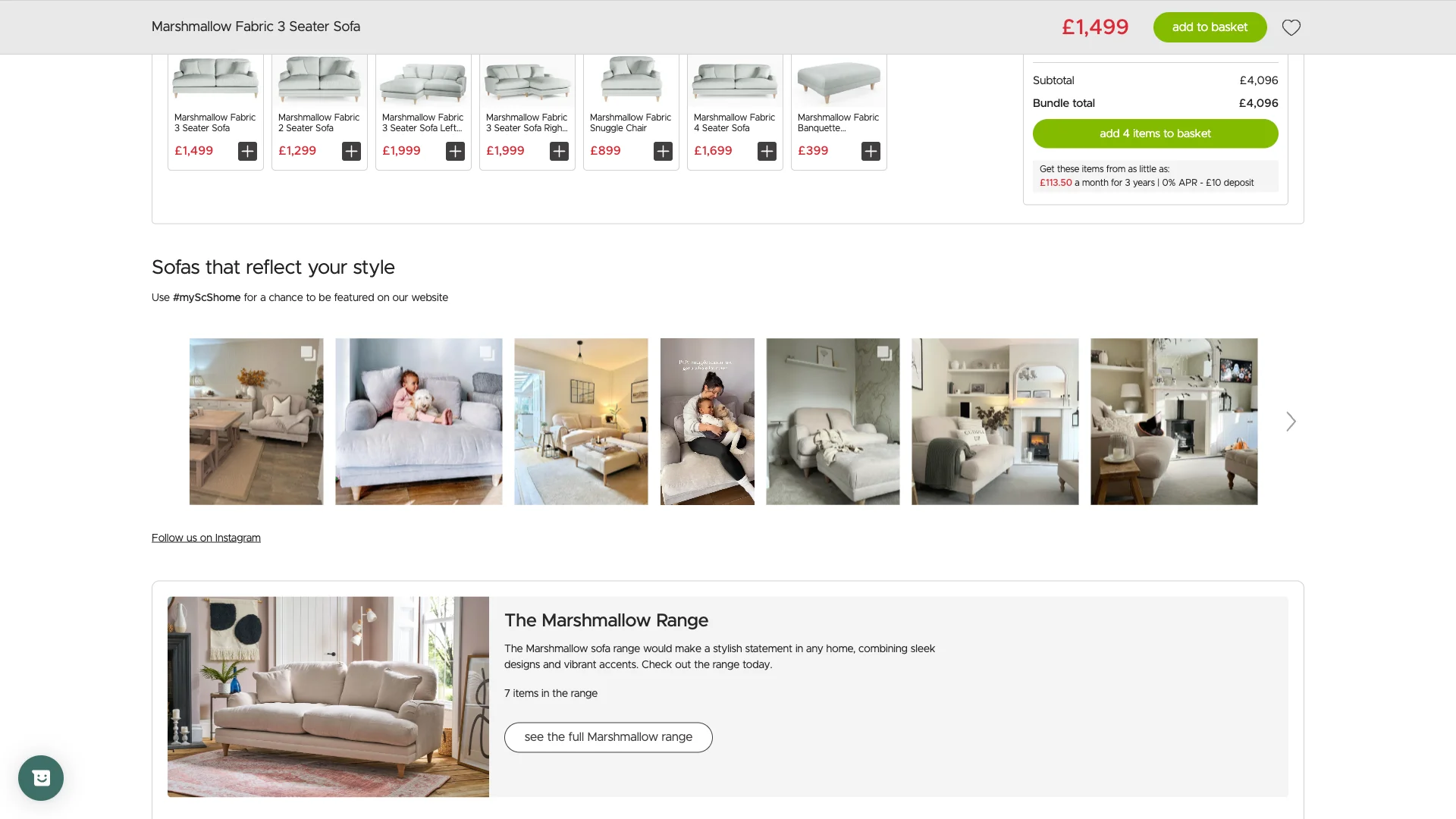
As the ScS case study shows, shoppers who interact with community content on their site convert 4.1x more often, and the brand recorded a 3.84% lift in conversion rate overall. When the purchase is considered, peer proof is doing the persuading.
“Buying a new sofa or piece of furniture for your home is an investment and decision-making can take a long time. You want to get the best value for your money and seeing the product recommended by someone else is proof of this. If others see the value in the product then you are more likely to.”
Katrina Bhowruth, Social and Content Manager at ScS
90% of marketers say influencer-generated and other user-generated content outperforms brand-owned content on engagement, and over 80% say it also converts better.
For a consumer brand, this means content budget spent on creator partnerships is likely to outperform the same budget spent on a studio shoot, at least on engagement; and the fact that over 80% also report better conversion suggests the community content is converting.
Instead of trusting the engagement increase to chance, Lampemesteren, a Nordic online lighting and design retailer, split-tested exactly where customer and creator content sits on their pages.
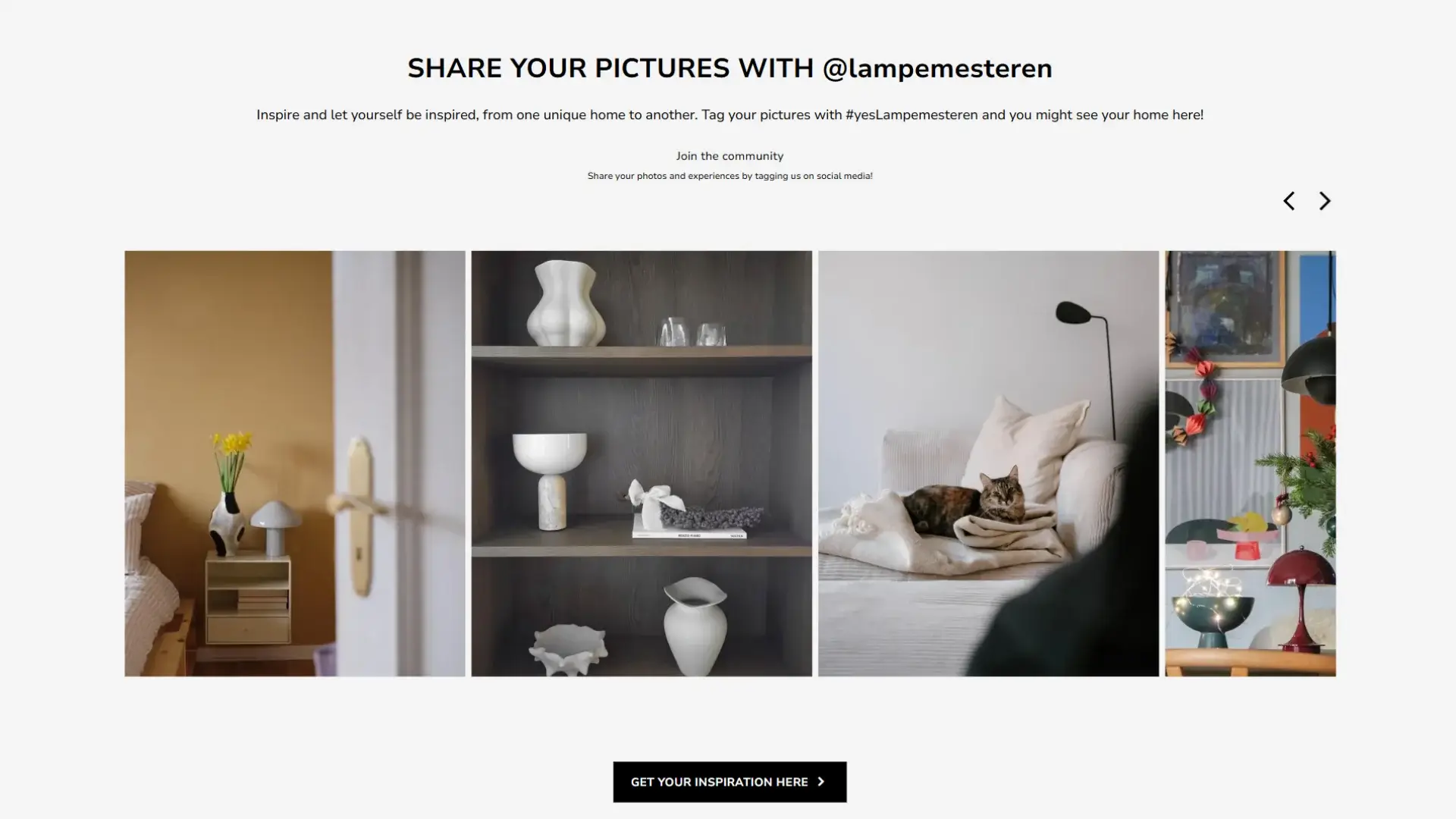
The brand watched conversion rise where the galleries landed, alongside a 5.5% lift in average order value. Learn more in Lampemesteren’s case study.
“Customers seem to find UGC more attractive than branded content, because people want to know how other people use our products. It’s easier to relate to.”
Jørgen Bækgaard, Ecommerce Manager at Lampemesteren
Flowbox data shows that working with 20 influencers at ~2,500 followers each delivered 2.25x more impressions and 5x more content than working with 4 influencers at ~10,000 followers, for a comparable spend.
Separately, accounts with 1,000–2,500 followers generate 2x the impressions per follower (0.44 vs 0.19) compared to accounts over 10,000 followers.
These results argue against the brand instinct to chase the “biggest” influencer they can afford, and toward spreading budget across more smaller partnerships. Knowing how to find the right influencers at that scale becomes the real skill.
Sklum is a Spain-based furniture and homeware brand that sells across global markets, with a brand identity built on a tightly managed aesthetic. For them, finding the right creators and collecting suitable content is essential to maintain a cohesive website design.
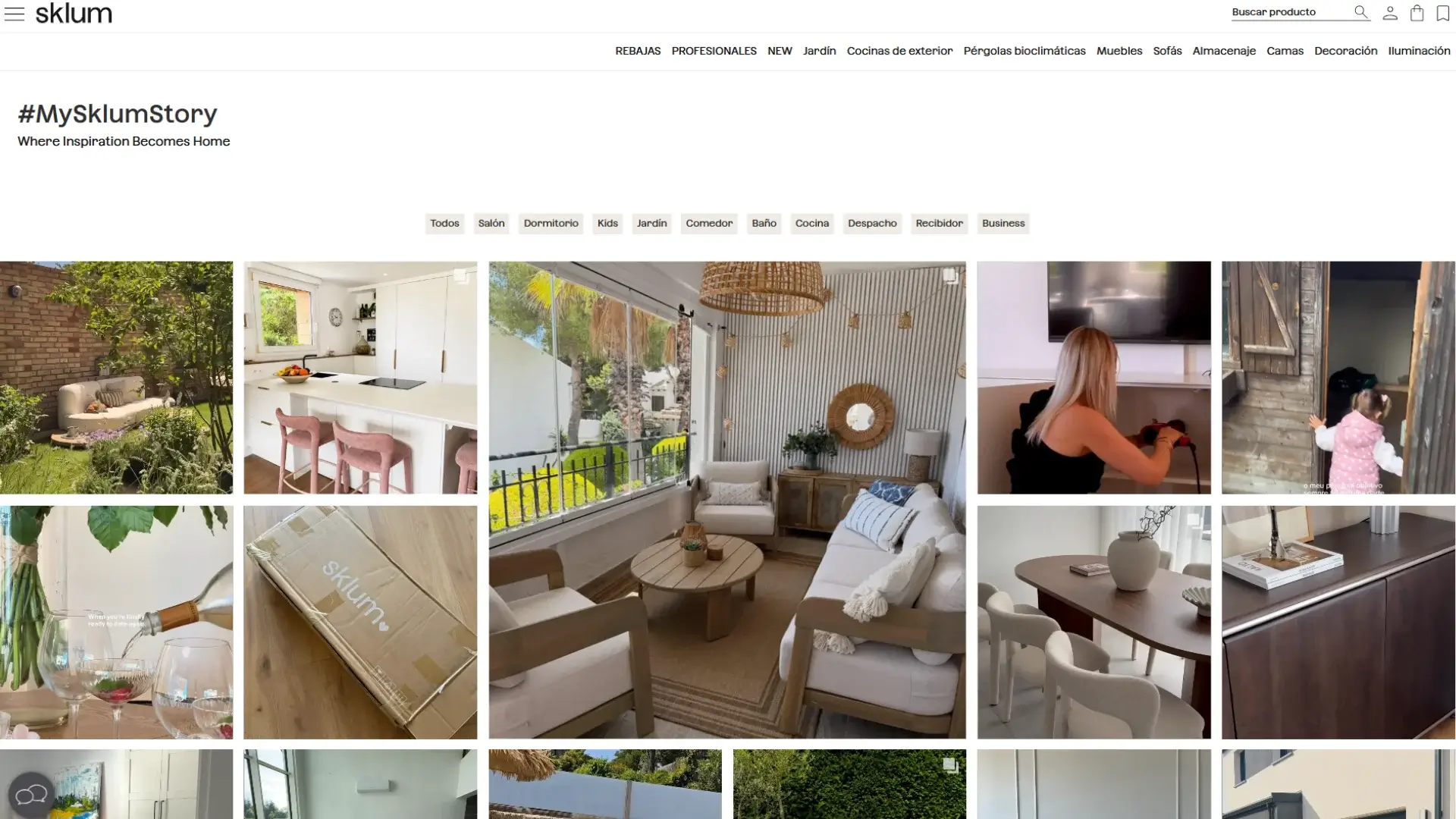
That’s why their discipline is so valuable: they understand that growing through many smaller creators only works if each one aligns with the brand. Sklum’s thoughtful approach shows how carefully choosing the right partners helps maintain high quality without micromanaging every detail.
“One of our priorities is to take care of the aesthetics and image of the brand, so when we partner with creators, we make sure their content aligns closely with our brand. This allows us to give them a lot of freedom regarding the type of content they want to create, because by filtering them so well, we know it will be quality content.”
Mar Escrivá, Head of Communication & PR at Sklum
Read the Sklum case study to understand how they promote authentic content from micro-influencers while keeping control of the brand’s aesthetic, while achieving a 13.8% click-to-rate on the content ‘View product’ CTA.
TikTok posts continue generating impressions for 30+ weeks, with the first 7 weeks as prime performance time. Instagram Reels now deliver 62% of total impressions after week 1 (38% in week 1, 52% in weeks 2–30, 10% in weeks 31–52), meaning influencer content isn’t a one-and-done media buy.
This changes how you should measure influencer marketing campaign success. Judging a campaign’s performance at the one-week mark, which is a common practice, would badly undercount its real value, and it also means posted content should generally stay live rather than being taken down quickly.
Beyond social feeds behaviour, placing content on your website extends its lifespan, and turning it into shoppable content extends its revenue impact. By collecting your strongest social content, curating it for your website, and connecting it to products from your catalogue, you turn something disposable into something that generates revenue every day.
Murwal has been working with influencers and creators since their early days, so they weren’t short of strong content; they were short of a way to stop it evaporating. Valuable posts were doing one lap of the social feed and then disappearing, contributing nothing after a few weeks.
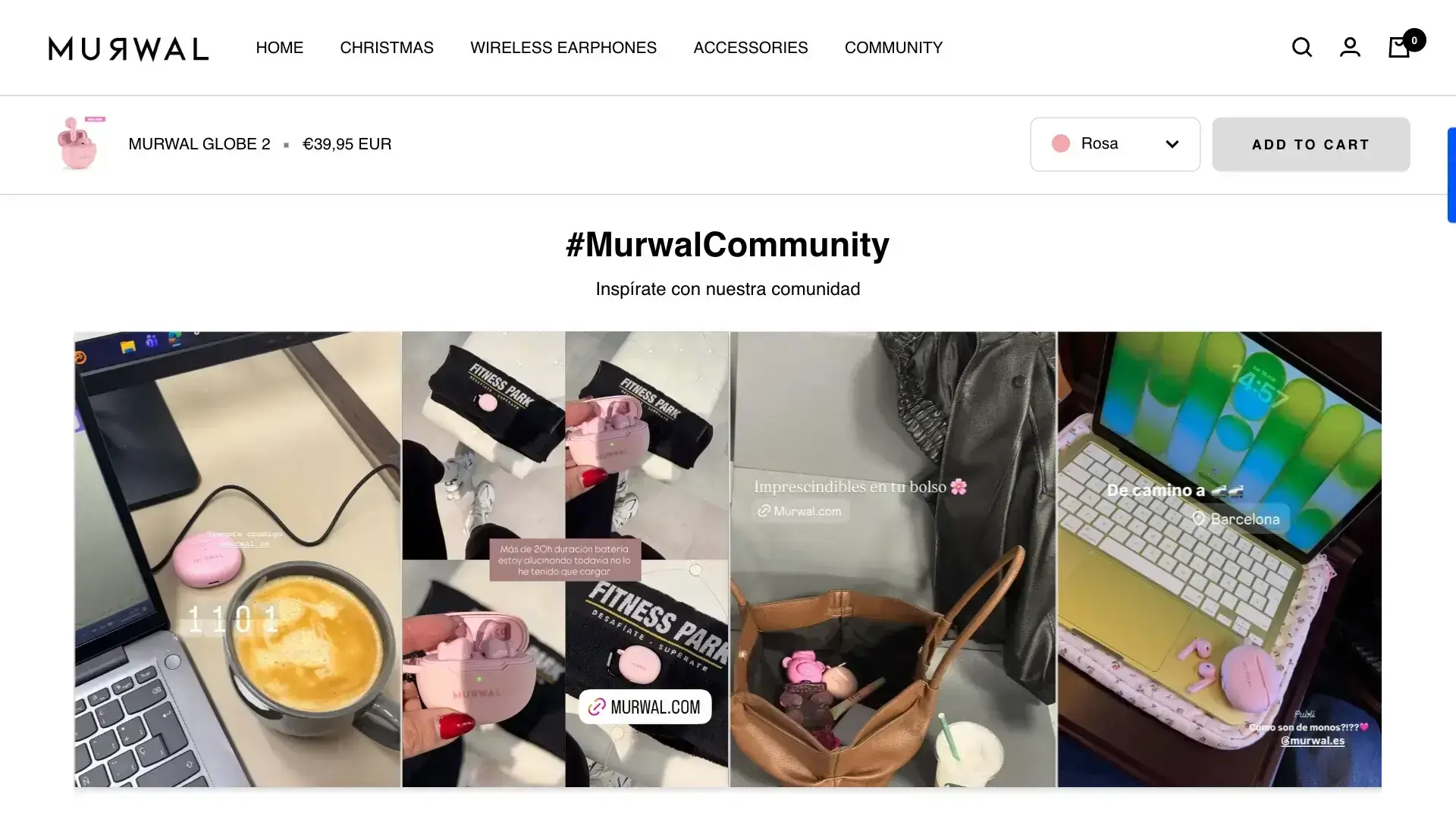
Murwal’s fix was to give that content a second home on the website and wire it directly into the shopping experience, so a creator’s post stops being a disposable impression and becomes a permanent, shoppable touchpoint on the path to purchase. Read more about Murwal’s results.
“The experience has been very positive. Thanks to Flowbox, we have been able to give much greater visibility to content generated by influencers and customers within our website, creating a much more dynamic and personal experience for the user.”
Lucía Sánchez, CEO at Murwal
86% of Gen Z search TikTok weekly (up 40% year-on-year), 46% now prefer social platforms over Google for search, and 44% discover new brands on social media daily.
This is a discovery benefit, not just a conversion one. A brand relying solely on traditional SEO and search ads to be found is missing a growing share of how younger consumers look for products in the first place.
Misako, a Spanish accessories brand with 25 years of history, rebranded with one explicit goal: reach a younger audience without alienating its existing one. They knew that, to reach them, they would need to be part of their world. So they started collaborating with micro-influencers to build trust and gain popularity within the community.
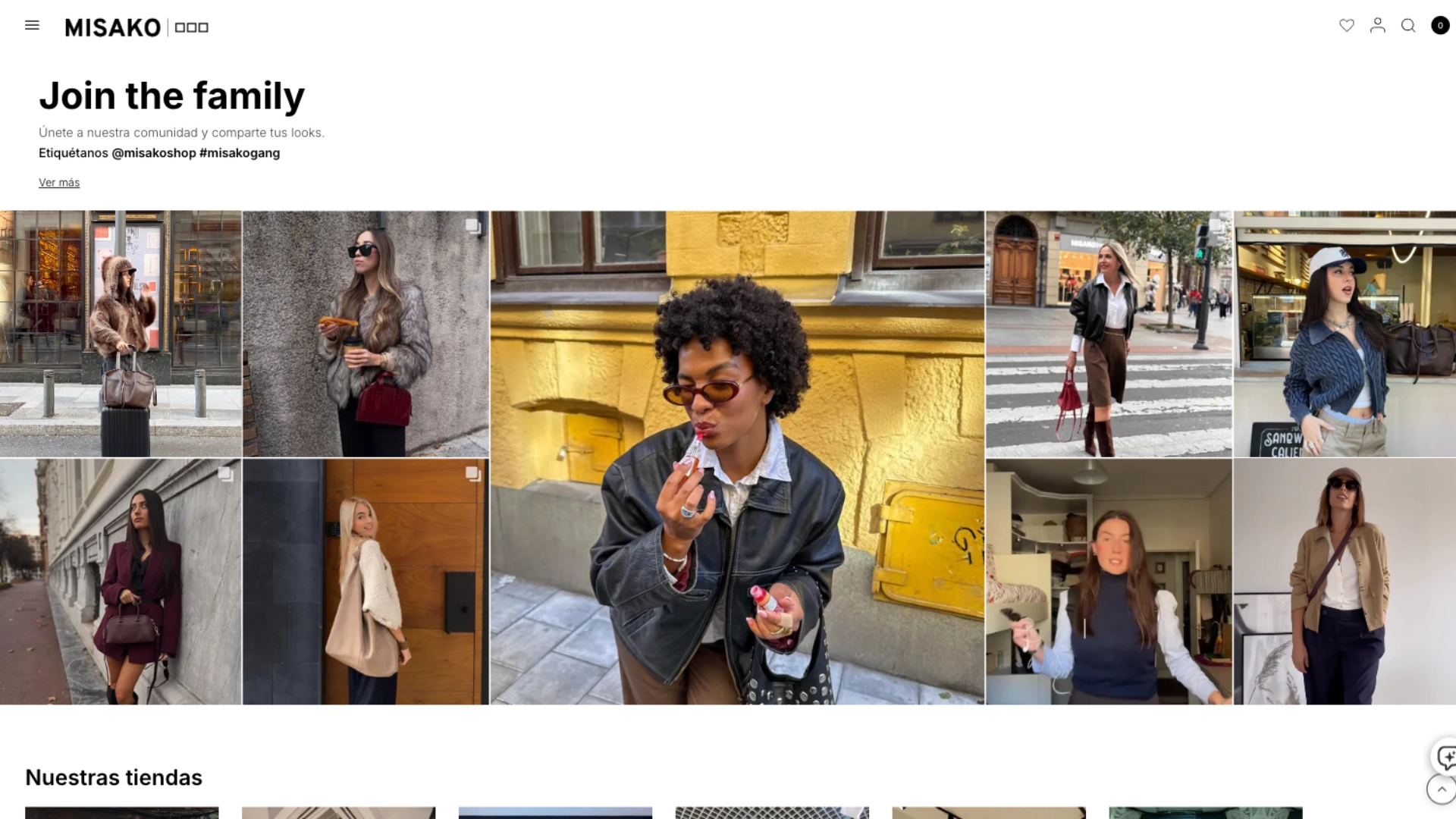
This really highlights why this benefit fits so well: meeting Gen Z where they find brands wasn’t just a happy coincidence for Misako; it was the core of their strategy. Learn more in the Misako case study.
“Flowbox has helped us continue along those lines which is what we were looking for since the rebranding, to approach a younger audience without losing our adult audience.”
Violeta Julbe, PR at Misako
Fashion leads micro-influencer collaborations at 27% of total volume, but Cosmetics (18%), FMCG and Consumer Goods (14% each), Home & Interior (11%), and Hospitality (8%) all have meaningful, proven activity across a wide range of industries which Flowbox supports.
That range matters because it answers the question most brands actually have: “does this work for us?” The data says it: it carries into considered, higher-ticket purchases like furniture and home interiors, into repeat-purchase categories like consumer goods and FMCG, and even into experience-led sectors like travel and hospitality where there’s no physical product to ship at all.
Knowing the benefits is the easy part. The harder work is turning influencer marketing into a channel that runs consistently: finding the right influencers, briefing them, keeping their content authentic but aligned with your brand, and extending its performance beyond a social feed by repurposing it to your website where it can sell. That’s the difference between a scattering of one-off posts and a compounding system.
A dedicated influencer marketing platform brings discovery, briefing, payment, and analytics into one place. Request a demo and see how Flowbox can help your brand manage influencer marketing campaigns.