Products
Case studies
Industries
Resources
I’m an Influencer
10 min read


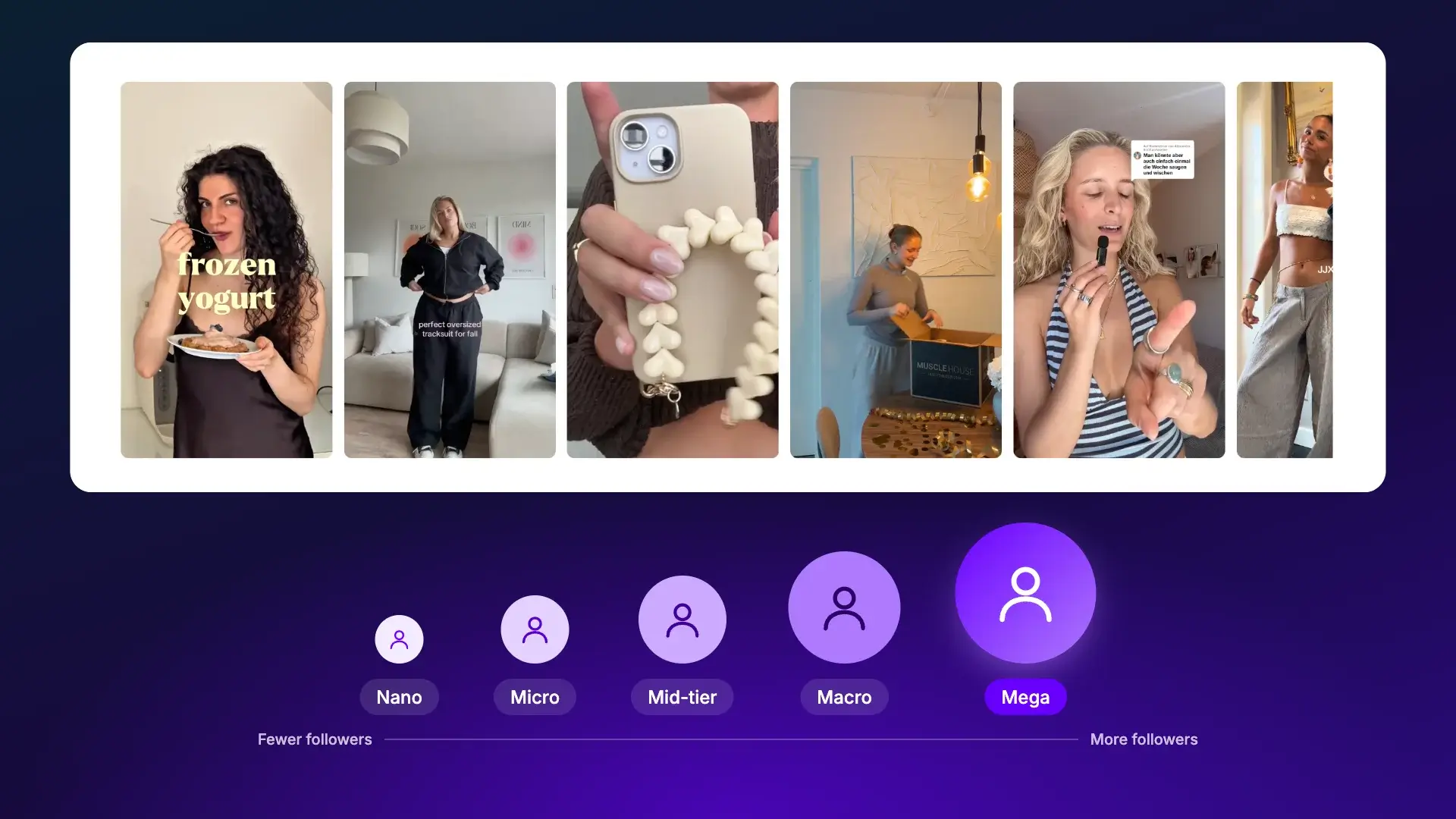
Table of Contents
Grouping influencers into tiers by follower count is one of the fastest ways to plan your influencer marketing strategy: it tells you who to partner with and what to expect once you do.
This article breaks down the five tiers, from nano to mega, with the reach, engagement, and cost you can expect from each tier, and how to match a tier to your brand’s goal.
If you are still deciding between paid creators and organic voices, it also helps to know the difference between consumer- and influencer-generated content before you start your collaborations.
An influencer tier is a category that groups creators by follower count, from nano-influencers with 1,000 to 10,000 followers up to mega-influencers with more than 1 million.
Influencer tiers matter because they turn an indefinite choice into a clear trade-off. There’s no ‘best’ tier, only a position on a curve. Go smaller for engagement, go bigger for reach, and expect to pay more as you climb the curve.
That trade-off is worth getting right, because creators now shape real purchases. According to the State of Micro-Influencer Marketing in Europe 2026, a quarter of consumers have bought a product on an influencer’s recommendation, and 72% of Gen Z and Millennials follow influencers specifically to research what to buy.
The report draws on 19,361 brand-influencer collaborations on the Flowbox platform, alongside Influencer Strategist and NeoReach’s Influencer Marketing Forecast 2026.
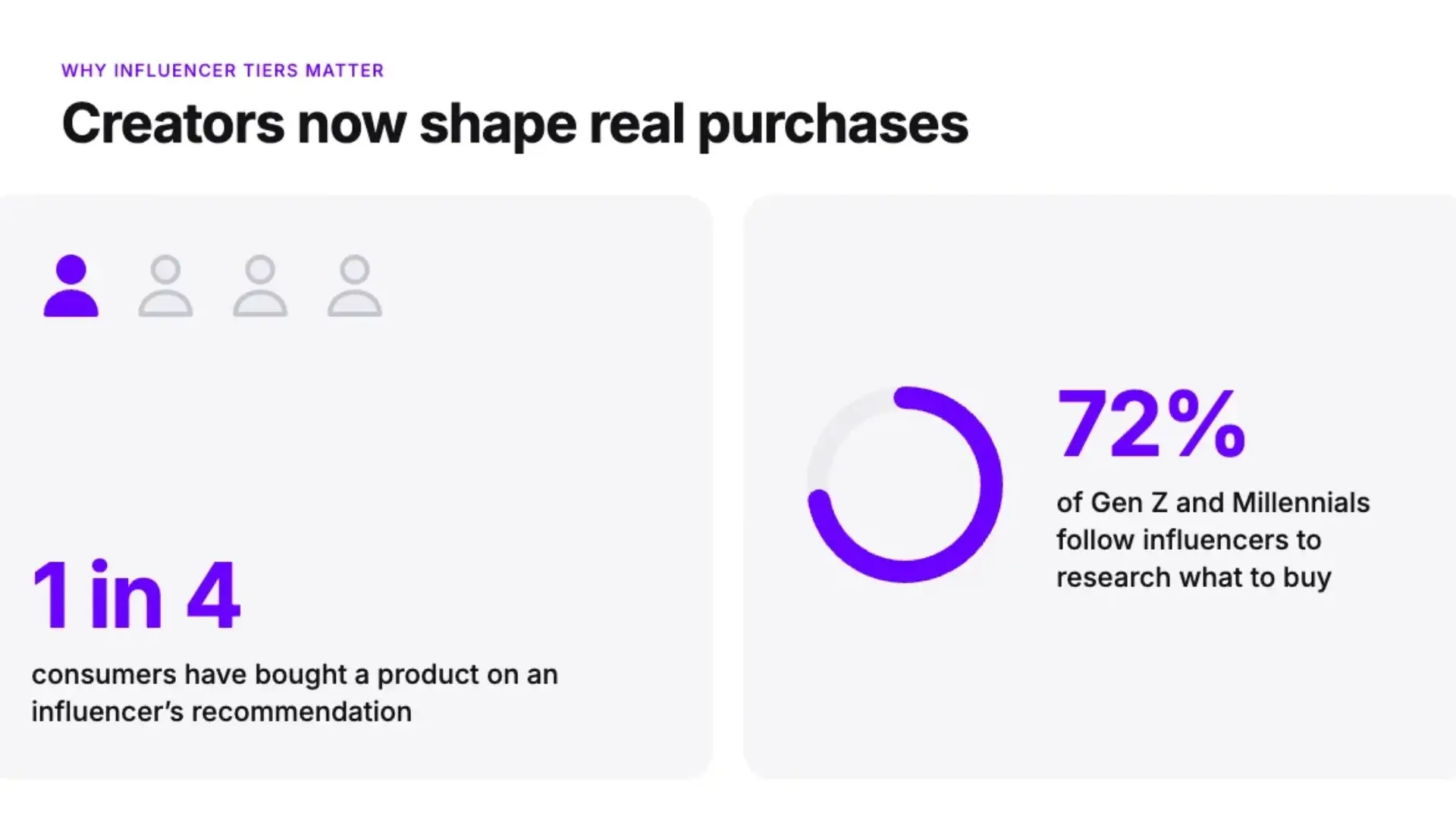
These figures show how influence starts well before the point of purchase. When shoppers are still comparing options, reading between the lines of a review and deciding who to believe, creators shape the outcome of this decision.
This changes the question brands should ask. It’s no longer just ‘how many people will see this?’ but ‘whose recommendation will this audience trust enough to act on?’, and the answer depends heavily on which tier you choose.
Size says nothing about who is actually listening. A creator with a million followers may have an audience spread across countries, age groups and interests that have little to do with your product, while a creator with 20,000 followers might reach exactly the customers you want.
Large accounts can also carry inactive or purchased followers that inflate the number without adding real reach. Before comparing tiers, check whether a creator’s audience matches your market, in location, language and interests. The right fit at a smaller size will usually beat the wrong fit at a larger one.
Smaller tiers tend to deliver stronger trust and better value for money, which is why the clearest trend in the market is a shift toward smaller creators. The rest of this guide shows where each tier earns its place.
Influencers are usually grouped into five tiers by follower count, and each tier weighs reach against engagement and cost. The table below maps all five by audience size, showing how cost and engagement move as follower counts grow.
| Tier name | Follower range | Engagement | Relative cost | Best for |
| Nano | 1k – 10k | Very high | Low (€50-100) | Local reach, authentic testimonials, niche communities |
| Micro | 10k – 100k | High | Moderate (€100-500) | Targeted reach within a defined niche, strong conversion |
| Mid-tier | 100k – 500k | Medium | Moderate to high (€500-1,500) | Balance between reach and conversion |
| Macro | 500k – 1M | Moderate | High (€1,500-10,000) | Broad reach with some topical relevance |
| Mega | 1M+ | Lower | Premium (€10,000-25,000) | Mass awareness, large product launches |
The pattern is consistent across the table: engagement falls as reach and cost rise. So the right tier depends on whether your goal leans toward engagement and conversion or toward reach and awareness.
Nano-influencers have between 1,000 and 10,000 followers, and they hold the most engaged audience of any tier, even at the lowest cost. Their communities are small, local, and tight-knit, which is why UGC from small communities carries so much weight, as their audiences are more likely to follow through to purchase.
The reach-per-follower ratio also favours nano-creators. Accounts with 1,000 to 2,500 followers generate roughly twice the impressions per follower than accounts above 10,000 do, according to the Flowbox platform data from 19,361 collaborations.
Spanish fashion brand Misako shows how this works in practice. Their homepage features a shoppable gallery of nano-creators, all with fewer than 10,000 followers, who tagged Misako in their own posts.
As the content comes from real customers rather than a campaign shoot, it carries the kind of genuine recommendation nano creators are known for. The gallery is also shoppable, so visitors can go straight from the creator’s post to the product.

The results show why this approach works. According to Misako’s Flowbox case study, their gallery content achieved a 7.17% engagement rate, meaning visitors don’t just scroll past the creator posts but stop to interact with them. Of those interactions, 7.97% led to a click on a call to action.
Much of nano-creators’ effectiveness comes from how close they are to everyday customers. Their content often looks like something a friend would post rather than a polished campaign, which makes it easy to reuse on product pages, in emails or in ads without feeling staged. They also tend to be easier to work with.
Many are open to product-for-content exchanges, are quick to respond to a brief and are happy to create several posts, so brands can test ideas fast before committing a bigger budget. Some of the best nano creators are already customers, which makes them a natural place to start.
Nano-creators fit local reach, authentic testimonials, and niche communities, at a cost of roughly €50 to €100 per post. However, the trade-off is total reach: one nano creator covers little ground, so you need a team of them to scale a campaign.
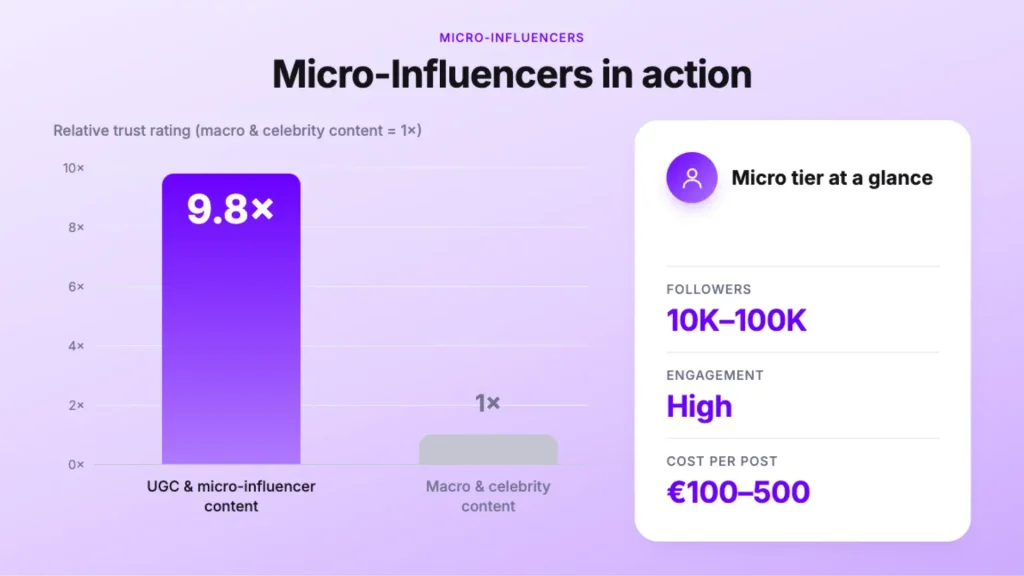
Micro-influencers (10,000 to 100,000 followers) are the conversion sweet spot, with high engagement, a defined niche, and a cost that stays moderate at €100 to €500 per post. They are large enough to matter and small enough to still feel personal.
This visual explains why micro-influencers punch above their weight. Shoppers rate UGC and micro-influencer content 9.8x more trustworthy than macro or celebrity content, from the State of Micro-Influencer Marketing in Europe 2026.
Micro-partnerships can also supply authentic assets for paid media. AIVIQ also implemented paid partnerships with micro-influencers which shows how the same partnership can supply authentic assets for paid media, not just organic posts.
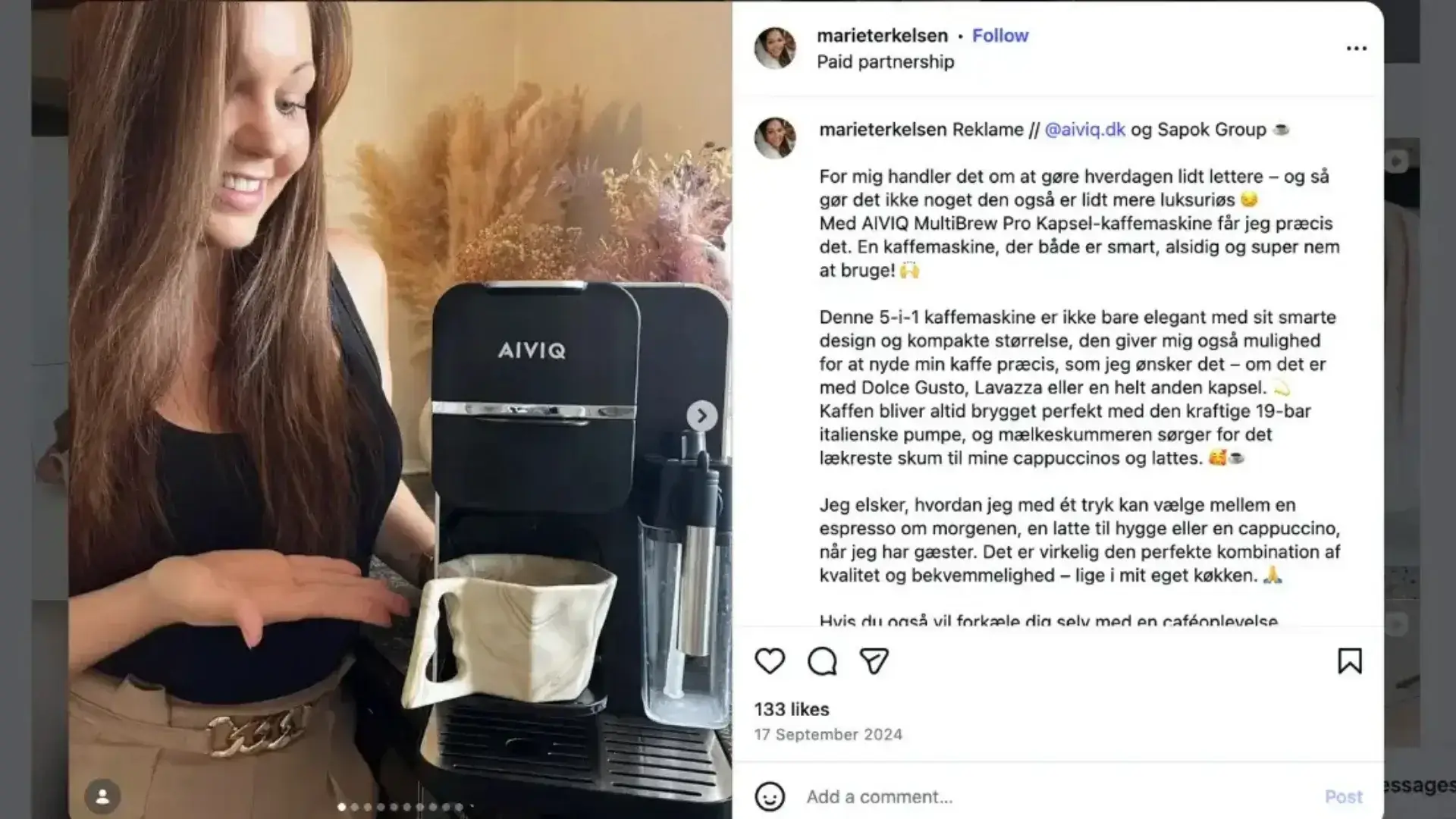
This micro-influencer post shows what this looks like in practice. It’s clearly labelled as a paid partnership, but it doesn’t read like an ad. The creator shows the AIVIQ MultiBrew Pro in her own kitchen and describes it in her own words, as something that makes everyday life a little easier and a bit more luxurious.
That personal framing is what makes micro content so useful for paid media. It looks native in a social feed, so it doesn’t get scrolled past the way a studio product shot often does.
Finding influencers for your brand gets much easier once you know which tier you’re looking for. Micro-influencers sit in the sweet spot between reach and trust. They have greater reach than nano creators, but their audiences are still small enough to feel personal.
The same as nano-creators, scale is still a problem. A single micro-creator won’t deliver mass awareness, so brands that need to reach a broad audience quickly will need either a larger roster of micro creators from an influencer marketplace or a move up to the next tier.
Mid-tier influencers (100,000 to 500,000 followers) sit at the balance point between reach and conversion. This is the tier where price starts climbing faster than engagement, landing between €500 and €1,500 per post.
Therefore, mid-tier makes most sense when you need more reach than micro can give without paying full macro rates.
The Spanish brand CREATE case study shows how mid-tier reach can work harder on a brand’s own site. It features content from a mid-tier creator with 195,000 followers in a shoppable creator gallery, so the content keeps working after the original post.
Visitors who discover the brand through the creator can find the same content on CREATE’s website and shop the featured products directly from it.
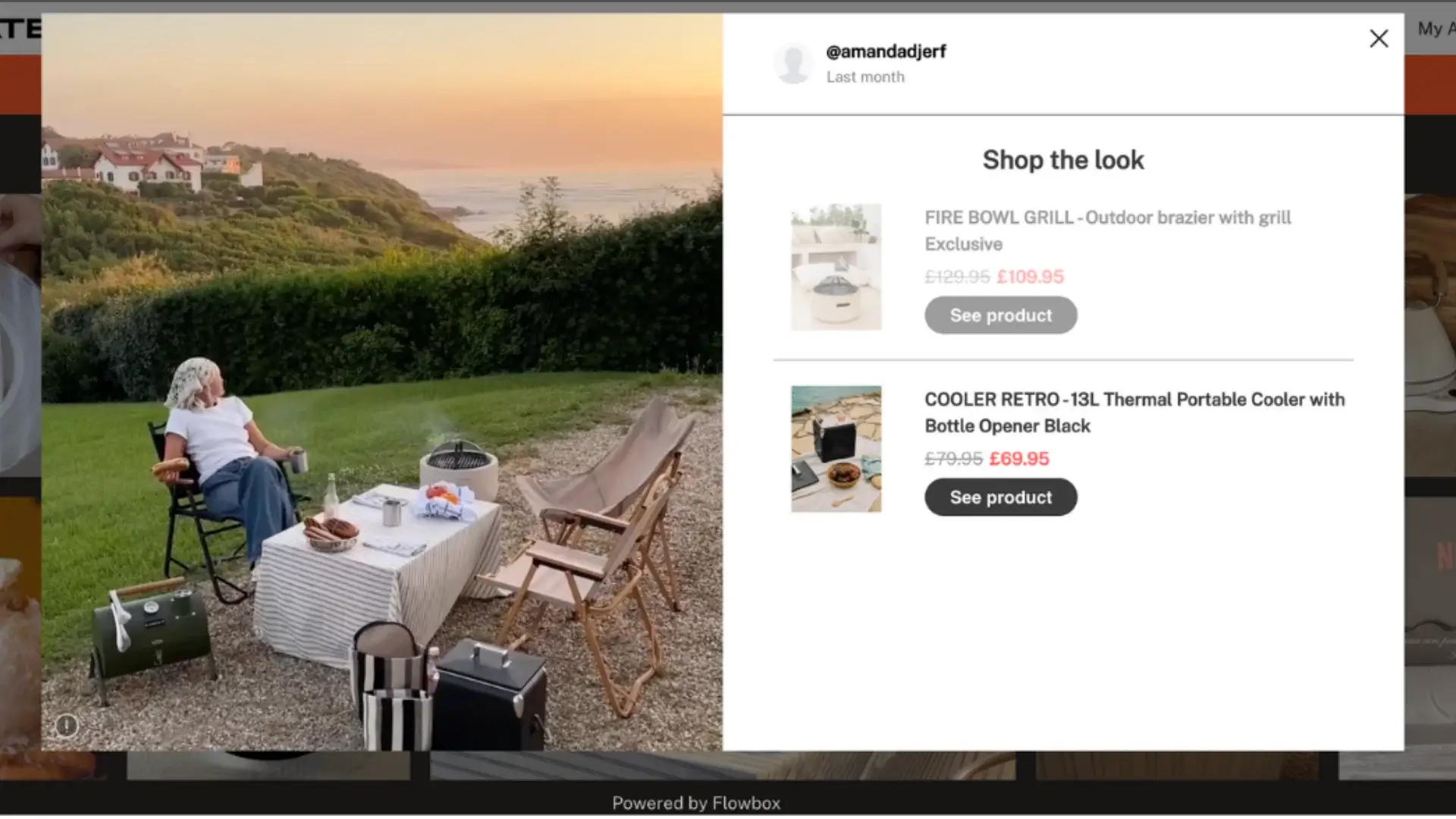
This is where mid-tier creators earn their higher rate. One partnership brings a wider audience to the brand, and the gallery turns that creator’s credibility into a reason to buy at the point of purchase.
“Most of the content in our flows is generated by satisfied customers sharing their experiences. We also have, to a lesser extent, content generated by influencers, who generally stand out for having more reach and standards closer to professional content. Between both, we manage to receive a large amount of content daily.”
Pedro Salazar, Digital Director at CREATE
Mid-tier creators are effective because they widen your reach without losing relevance. Their audiences are noticeably larger than micro creators’, but still focused enough to suit a specific niche, so they work best as a scaling step rather than a trust engine.
Engagement eases to medium, a fair trade for that bigger audience. They’re especially useful once a niche campaign has proven itself and you want to take it to a wider audience, or when you’re expanding an existing influencer marketing strategy.
Macro-influencers have between 500,000 and 1 million followers, and they bring broad reach to a campaign at a higher cost. Engagement settles to moderate, and a single post costs anywhere from €1,500 to €10,000, so you’re trading engagement and budget for the size of the audience.
Moulinex shows how a macro-partnership can keep paying off after the post goes live. The brand features content from a macro-creator with 723,000 followers in their creator gallery on their homepage.
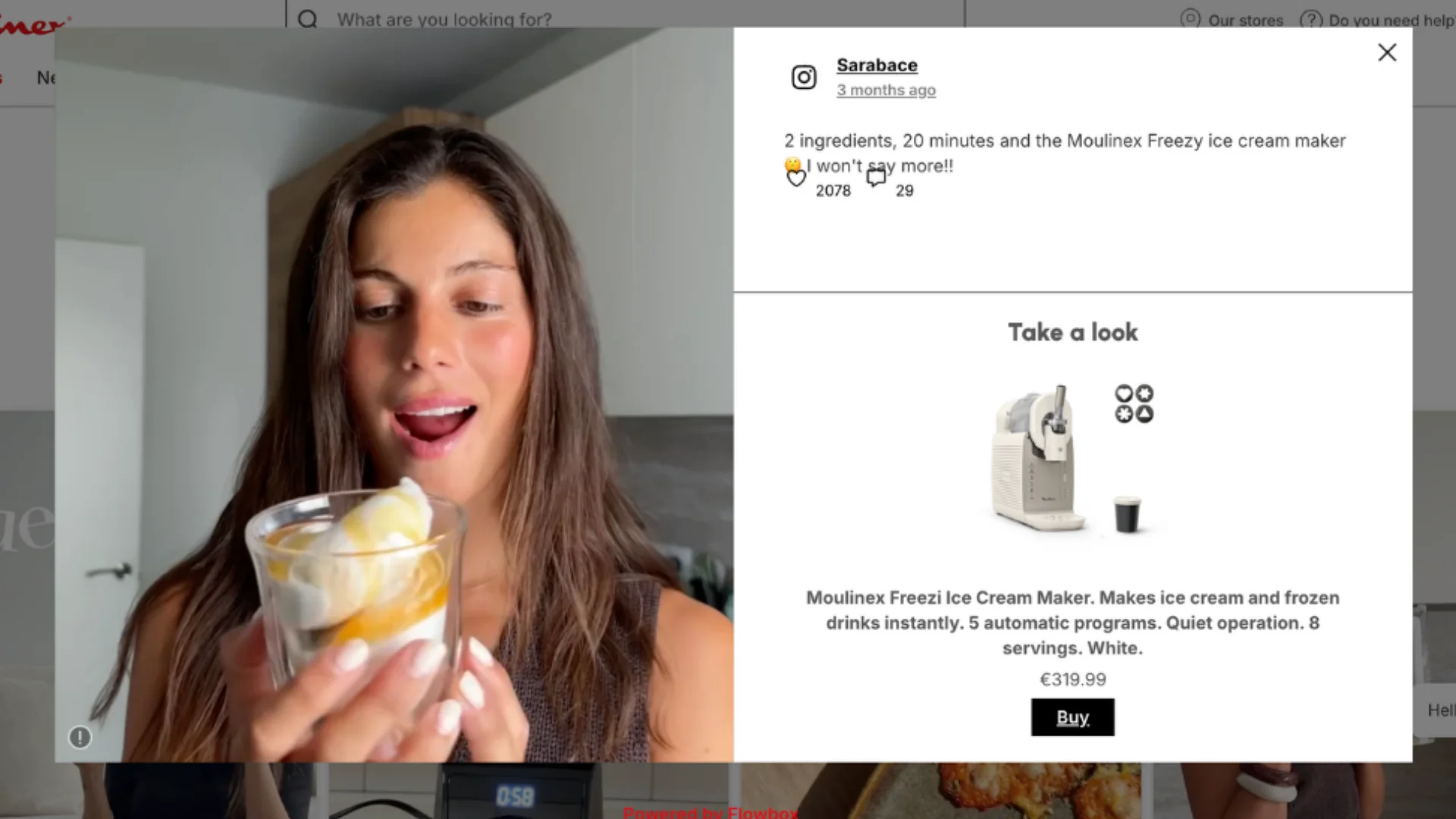
For Moulinex, the value of creator content goes beyond a single campaign. Collecting and displaying it through Flowbox allows the brand to keep that content in front of shoppers long after the original post, and, as explained in the Moulinex case study, the team has seen the difference firsthand.
“One note: in the first year, the content is partly from end users, but we also make the most of content from influencers who work with us, because it’s very high-quality and very well prepared.”
Carles Aragones, D2C Lead at Groupe SEB Iberia
Macro-creators earn their place when you need reach quickly or want topical relevance from a recognised voice in your category. To get the most from that budget, let the creator’s audience discover the brand, then reuse the same content where buying decisions happen.
The limitation is efficiency. Many smaller partnerships often outperform one big name on reach and content volume. With macro creators, you pay for the audience rather than the engagement, which can push up your customer acquisition cost.
Mega-influencers and celebrities have audiences above 1 million, and they deliver the widest reach of any tier at the lowest engagement and a premium cost of €10,000 to €25,000 per post. They are built for mass awareness and major product launches, not for intimate recommendation.
The brands that get the most from this tier treat it as a launch moment rather than an always-on channel. They choose a name that fits their identity and build the rest of the campaign around it.
G-STAR shows what this tier does best. The brand chose a celebrity with 6.3 million Instagram followers as the face of their new denim collection.
She also shared the campaign on her own Instagram, which put the collection in front of millions of people in a single post. That kind of reach would take hundreds of nano- or micro-partnerships to match.

This is the mega-influencer tier working as intended. The goal isn’t an intimate recommendation from a trusted influencer, but instant visibility and the credibility that comes with a famous name.
Mega-influencers are highly effective for visibility but less so for trust. For a major launch, their recognition is exactly what you’re paying for: one post can put a brand in front of more people at once than any other tier.
A celebrity post reads as a paid placement rather than a personal endorsement, which is why consumers rate UGC creators and micro-influencers 9.8 times more trustworthy than macro and celebrity content, according to the State of Micro-Influencer Marketing in Europe 2026.
The most effective approach is to use mega-influencers for awareness and let smaller creators do the converting. Their authentic, relatable content builds on the attention a launch creates, turning that visibility into purchases and lifting your eCommerce conversion rate.
Most brands don’t need just one tier: they need the right mix for each stage of the customer journey.
A common approach is to implement one macro-partnership to put your brand in front of a large audience, then activate smaller creators who create content for a discount or a modest fee. That turns one expensive placement into a steady, lower-cost content stream.
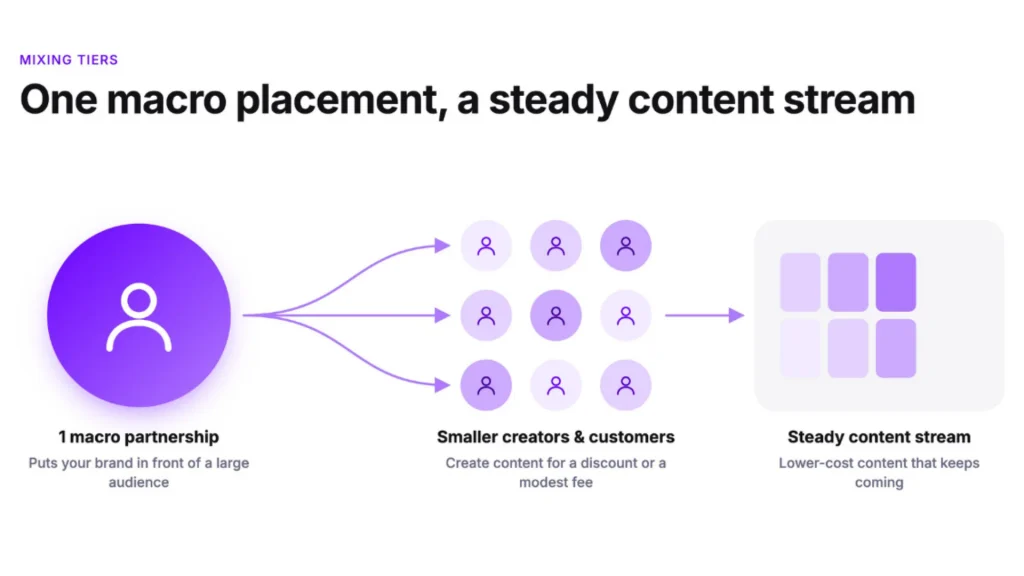
Running several tiers at once means managing many relationships, and that’s where Flowbox’s influencer marketing platform helps.
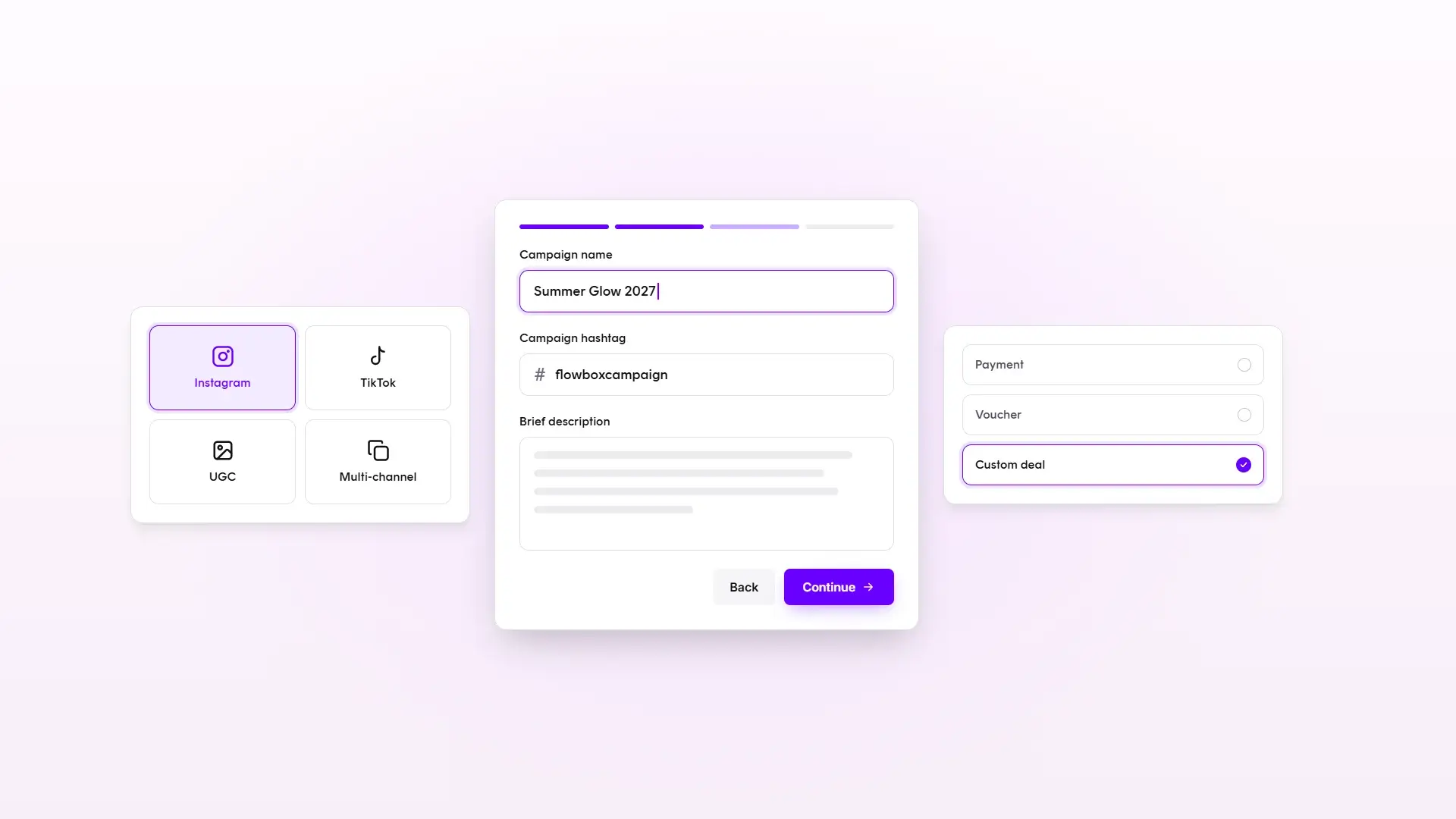
You can use AI matchmaking to find nano and micro influencers who fit your brand and also invite them through a recruitment page. Then organise them into groups, so each one gets the right brief. Campaigns, messages, content and payments all sit in one place, eliminating the need for separate channels.
Whichever tiers you combine, our influencer marketing platform does the filtering, so you can sort verified creators by niche, audience, and engagement rather than by follower count alone.
The pattern holds across every tier: engagement falls as reach and cost rise, so the biggest audience is rarely the best value. The clearest trend is the shift toward smaller creators, because nano- and micro-partnerships hold the trust.
Choose the tier that fits the job, measure what each creator actually returns, and reuse the content long after the campaign ends.
Ready to match with the right creators for your goals? Request a demo and see how Flowbox brings creator discovery, rights, and briefing into one connected space.
Influencers are usually grouped into five tiers: nano (1,000–10,000 followers), micro (10,000–100,000), mid-tier (100,000–500,000), macro (500,000–1 million) and mega (over 1 million). Each tier trades reach against engagement and cost. As follower counts grow, reach and cost rise while engagement falls.
Nano-influencers, with 1,000–10,000 followers, have the most engaged audiences of any tier. Their small, tight-knit communities trust them more, so followers are more likely to act on a recommendation. According to Flowbox platform data, engagement measured by impressions peaks at 24.5% in the 5,000–10,000 follower bracket.
Cost rises with follower count. Typical ranges are €50–100 per post for nano creators, €100–500 for micro, €500–1,500 for mid-tier, €1,500–10,000 for macro and €10,000–25,000 for mega-influencers and celebrities. Rates vary by platform, niche and campaign scope.
Most brands get the best results from a mix. A common approach is to use one macro or mega partnership for awareness, then activate nano and micro creators who build on it with authentic content that drives conversions. That way, one expensive placement leads to a steady, lower-cost content stream.
A platform centralises recruitment, campaign briefs, content tracking and payments in one place, so you can run more creators with less admin and actually measure what each one returns.
Yes, you can run influencer marketing campaigns without a platform, but it stops scaling fast. Managing briefs, contracts, content collection, UTM tracking, payments and tax reporting across more than a handful of creators by hand means spreadsheets, scattered DMs and content you lose track of.
Flowbox gives you the whole workflow in one place to manage your tiers from nano to micro influencers: AI matchmaking to help you discover relevant creators, a recruitment page to build your own ambassador team, campaign briefs with hashtag tracking, a content library that collects every post automatically, built-in payments, and UTM and Impact Score analytics to judge results.