Products
Case studies
Industries
Resources
I’m an Influencer
16 min read
Last updated on: 09/11/2026


Table of Contents
Influencer marketing platforms are the software brands use to run creator programs without living in spreadsheets. The best ones offer tools to handle everything from finding the right influencer to briefing and paying them, then show what each campaign actually achieved.
The influencer marketing market has crowded quickly, and the tools aren’t interchangeable. Some are built for enterprise governance, others for Shopify integrations, and a few blend creator work with organic user-generated content and on-site commerce.
This guide compares the leading influencer marketing platforms for DTC and eCommerce brands and answers key questions for teams seeking a tool to manage their influencer marketing.
Influencer marketing platforms are software that let a brand or agency run creator campaigns from one dashboard, rather than managing them through email threads and spreadsheets. They are especially useful for established brands wanting to scale their influencer marketing strategies.
Most influencer marketing platforms cover a common set of jobs: finding and briefing creators who fit the brand, tracking campaign progress, collecting posted content, and reporting on results. Many now add creator payments and discount-code tracking so performance ties back to revenue.
An influencer marketing platform can make your entire influencer collaboration process smoother and more effective. They also give you valuable insights into what’s working, help you optimise your strategy, and turn influencer partnerships into authentic content that builds trust and drives real results for your brand.
When evaluating a platform to partner with, it helps to separate three overlapping categories:
Learn more about creator marketplaces and UGC platforms in their dedicated articles.
Before comparing names, it helps to know what actually separates a strong platform from a thin one. These are the criteria that matter most for DTC and eCommerce teams:
Choosing the right influencer marketing platform ultimately depends on your goals, budget, and how your team works. Some brands prioritise creator discovery and briefing, while others want an all-in-one tool that also handles the creator payment, content repurposing, and analytics.
Now that you know what an influencer marketing platform is and what to look for when choosing one, let’s dive deep into each one.
Here are the standout influencer marketing platforms, what they are best for, and corresponding pricing. Each offers a different approach to working with creators.
| Platform | Best for | Pricing |
| Flowbox | Best for scaling influencer marketing with a verified network | Custom |
| Kolsquare | Enterprise brands with compliance-heavy programs | Custom |
| Influencer Hero | Always-on gifting & affiliate programs | Starting at ~$5,448/yr |
| Influee | Affordable collaborations without cold outreach | Starting at ~$2,748/yr |
| Modash | Shopify tracking attached to creators | Starting at ~$2,388/yr |
| Influencity | Flexible, analytics-led creator management | Starting at ~$1,900/yr |
| IQFluence | AI-assisted discovery & campaign monitoring | Starting at ~$2,832/yr |
| Collabstr | Fast, transactional creator hiring with no subscription | Starting at ~$2,988/yr |
| Influence (Brandwatch) | Influencer workflows & social listening | Custom |
| Upfluence | Influencer & affiliate activity on eCommerce | Custom |
| CreatorIQ | Enterprise, multi-market analysis | Custom |
| Aspire | Scaling ambassador & affiliate programs | Custom |
| GRIN | Repeated collaborations & product seeding | Starting at ~$2,400/yr |
| JoinBrands | A steady supply of authentic content for ads | Starting at ~$1,188/yr |
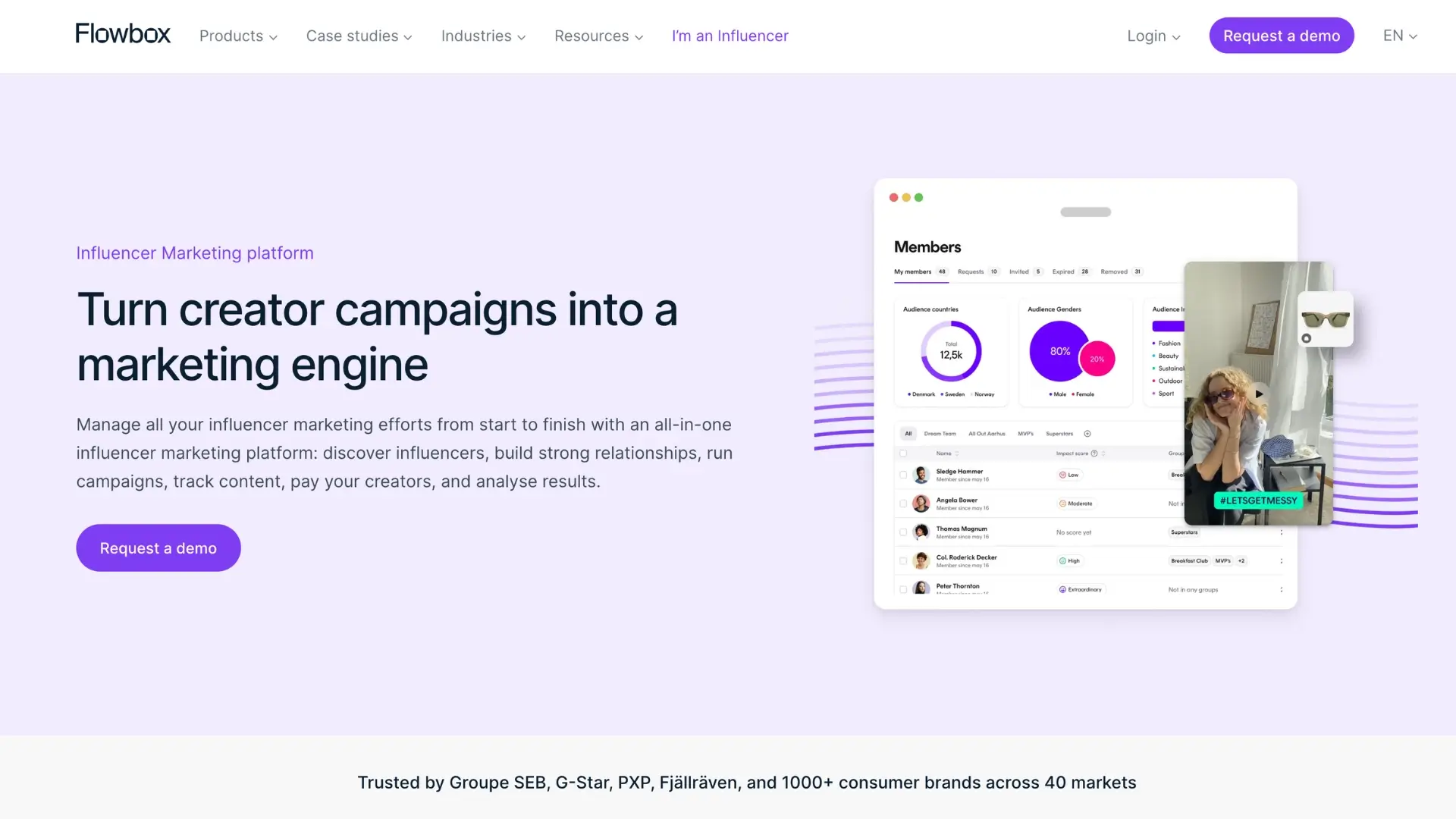
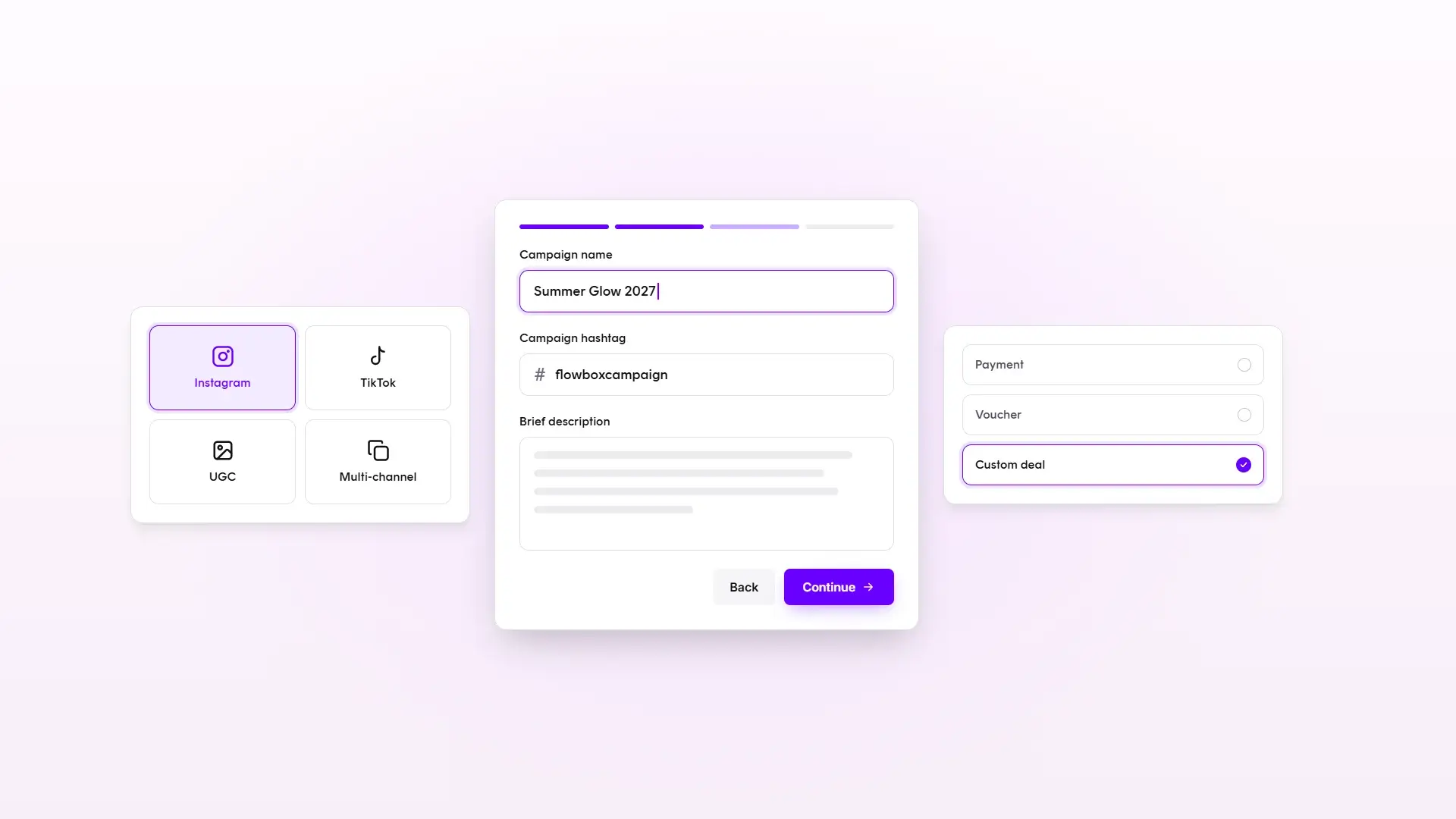
Flowbox is a European UGC and influencer marketing platform headquartered in Sweden that allows brands to partner with creators and influencers to reach new audiences, build and manage ambassador teams, run campaigns with briefs and hashtag tracking, pay creators in-platform, and track results with an Impact Score and UTM links.
Its distinguishing move on this list is reach beyond the social post. Creator content can power shoppable galleries on the website and product pages, ads and newsletters, so an influencer campaign keeps converting long after it goes live. Its GDPR-native suite combines influencer marketing, UGC management and ratings and reviews.
The company serves more than 1,000 brands in 40 markets, including Groupe SEB, G-Star, PXP, Fjällräven, Sony and Starbucks.
Build and manage influencer and ambassador teams; campaigns with briefs and content tracking; in-platform creator payments; Impact Score & UTM links; content repurposing as shoppable galleries on site, product pages, ads and newsletters; GDPR-native suite combining influencer marketing, UGC management, ratings & reviews.
Custom. Request a demo to learn more.
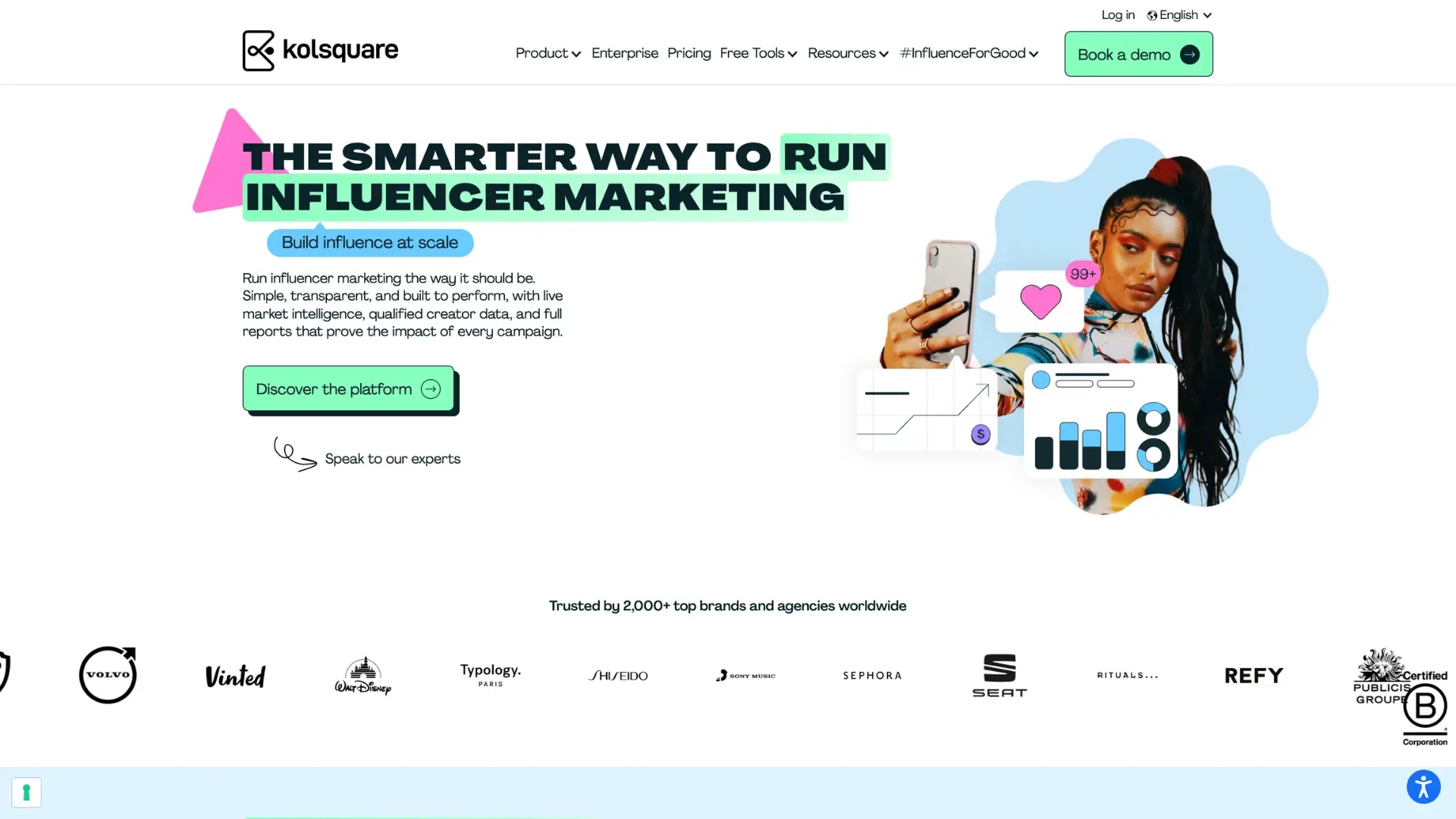
Kolsquare is an influencer marketing platform headquartered in Paris, built around Key Opinion Leader (KOL) discovery, relationship management and campaign reporting. It helps brands and agencies discover creators, manage campaigns, measure performance and scale influencer marketing.
Now part of the team.blue group, Kolsquare serves around 2,000 brands and agencies, including Sephora, Shiseido, KLM, Volvo, Vinted, LVMH, and Publicis.
KOL discovery, relationship management, campaign reporting; built-in scores & insights.
Custom. Request a demo to learn more.
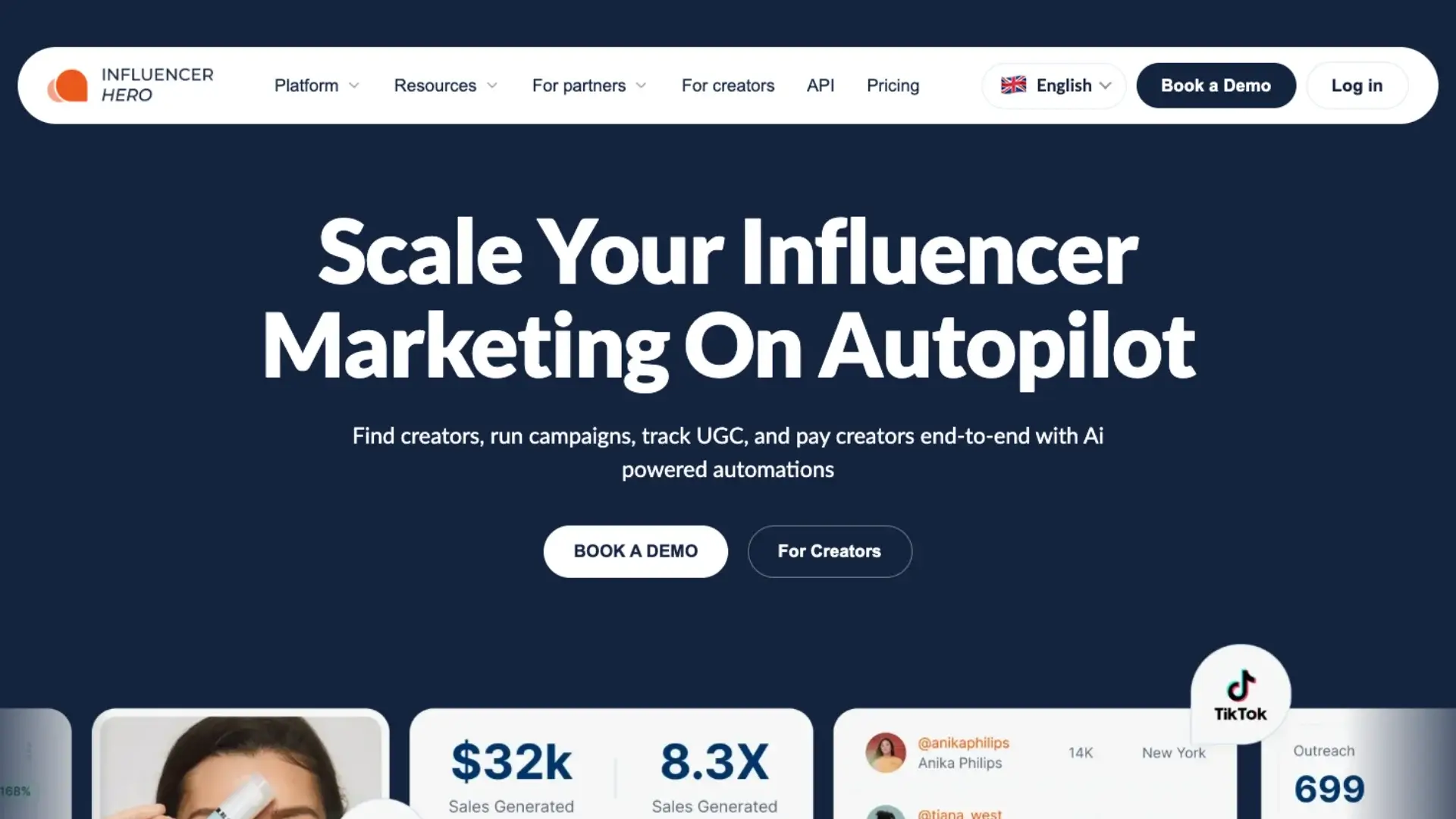
Influencer Hero is an all-in-one influencer marketing platform that helps D2C brands and agencies run their whole creator program in one place. That covers discovery, outreach, CRM, product seeding, affiliate tracking, payouts and reporting. Brands get access to a 450M+ global database of creators across Instagram, TikTok and YouTube.
The platform is built for scale. Brands can automate gifting and affiliate programs with hundreds or thousands of creators each month, give every creator a unique discount code for sales attribution, and pay out commissions at a 0.4% fee. It connects to 65+ integrations, including Shopify. Its MCP lets teams run large-scale actions straight from Claude or ChatGPT, not just pull data.
The company serves brands like Lululemon, Nespresso, Runaway, Under Armour, Glamira and Sephora.
Discovery, outreach, CRM, product seeding, affiliate tracking, payouts, reporting.
Paid yearly, the Standard plan costs $5,448, the Pro plan costs $8,808 and the Business plan costs $20,916. They also offer an Enterprise plan for agencies and enterprises that need custom quota, unlimited seats and hands-on strategic support.
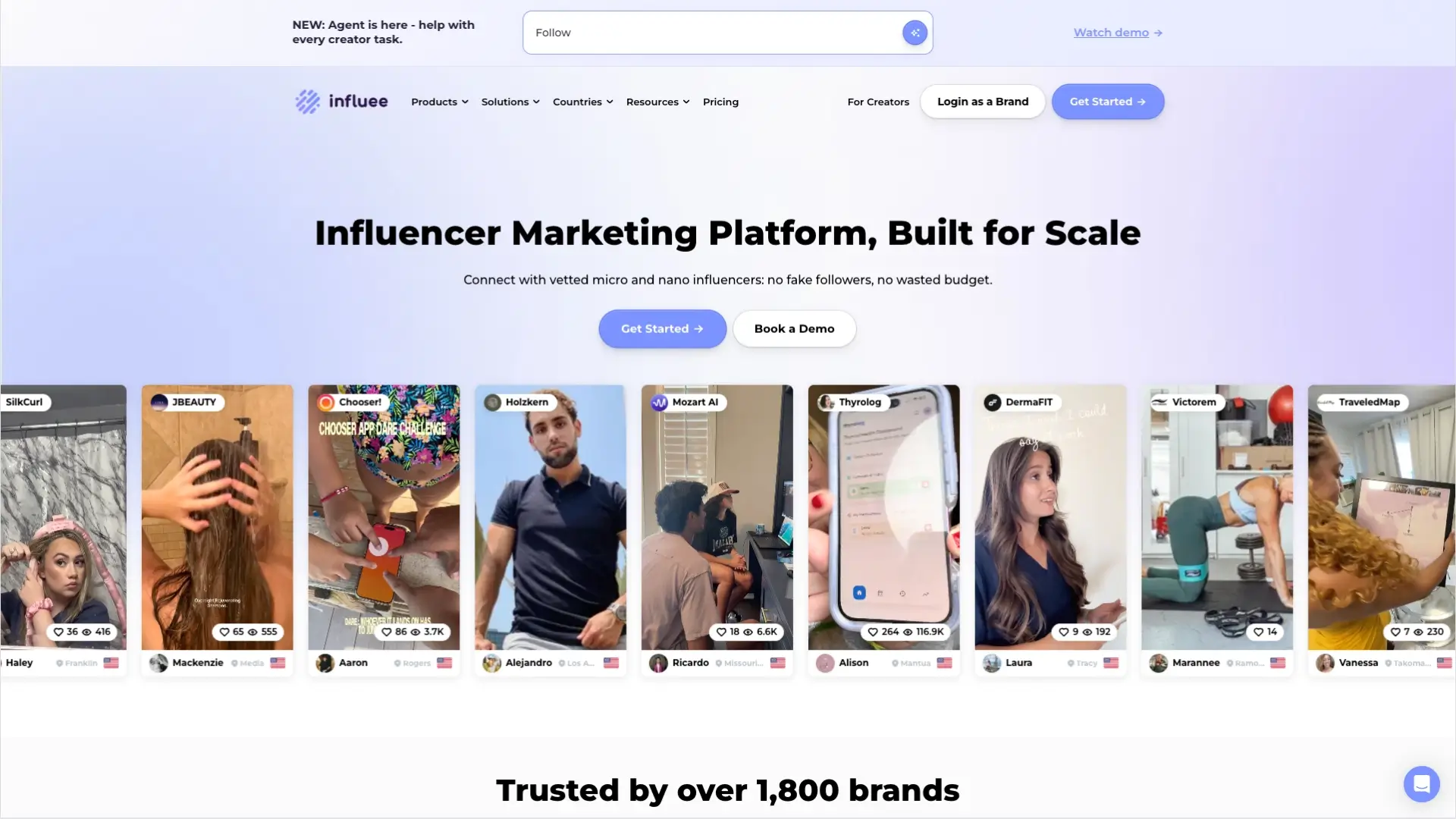
Influee is a UGC and influencer marketing platform with more than 170K vetted creators and influencers from 30+ countries. Instead of cold outreach, a brand posts a brief and interested influencers apply. The brand reviews their portfolios and past work, picks the ones that fit, and skips the rest.
Briefs, content approvals, and delivery are all managed in one place, so brands of any size can launch a campaign in any of those markets without a big budget or a long setup. Influee’s AI agent and MCP server let brands set up campaigns, message creators, and handle follow-ups straight from Claude or ChatGPT.
The company serves over 1,800 brands, including Axe, Preply, Spotahome, Golden Tree, Eneba, and Else Nutrition.
Vetted creators; brief-and-apply model; briefs, approvals & delivery in one place; AI agent & MCP server.
Pricing for influencer marketing isn’t specified on their website, but on-demand UGC creation ranges from $229/month to $999/month, with an additional Enterprise plan tailored to brands’ needs.
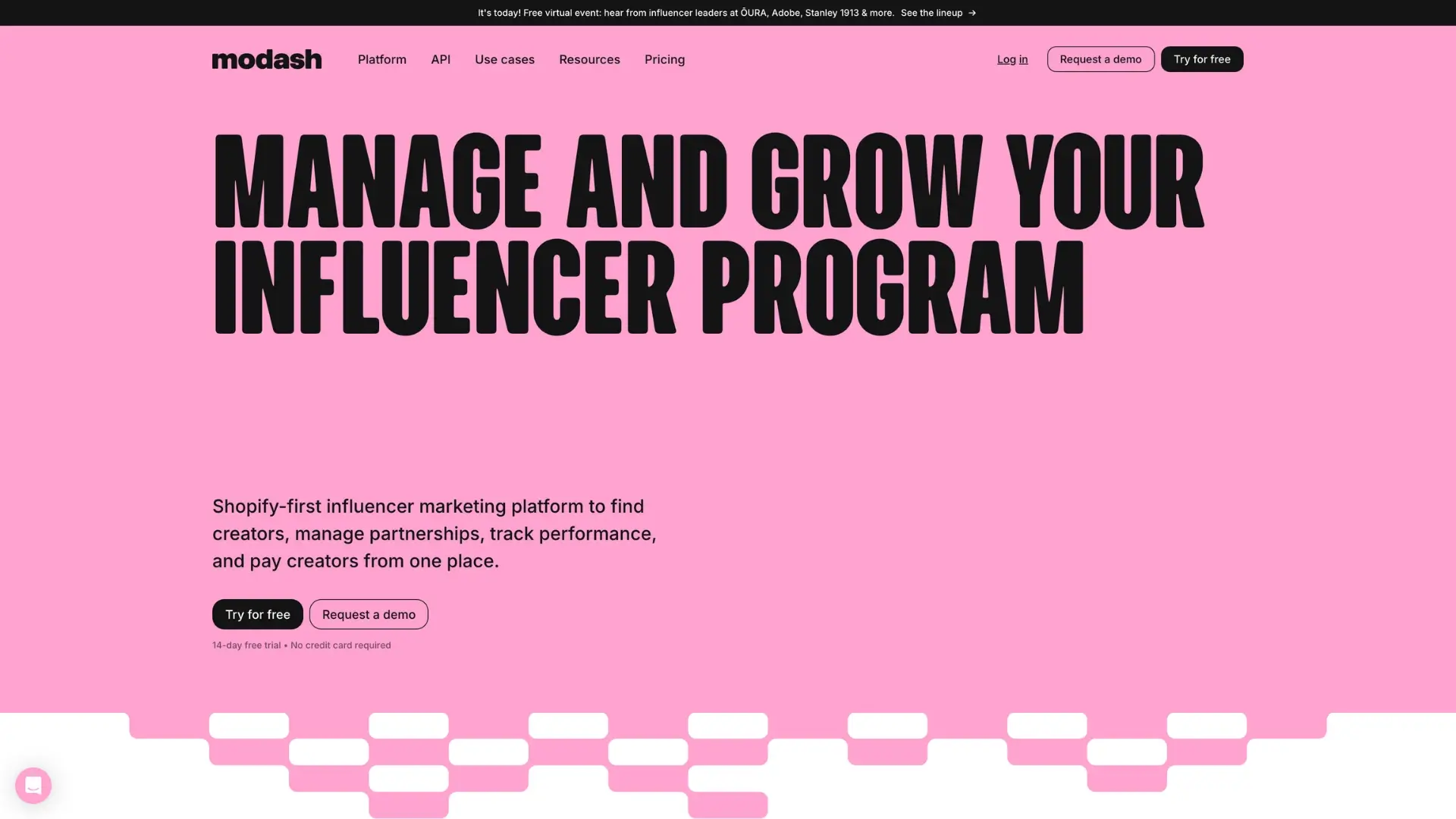
Modash is a Shopify-first influencer marketing platform headquartered in Estonia that helps brands find creators, manage partnerships, track performance, and pay creators from one place. The two-way sync between Shopify and Modash ensures discount codes, orders, and revenue stay consistent in both places.
Rather than an opt-in verified network, it indexes a very large share of public creators from Instagram, TikTok, and YouTube. It pairs that index with Shopify tracking and creator payments, which suits performance-minded teams.
Modash serves 2,600 teams, including Birkenstock, Stanley, NordVPN, Sennheiser, Montblanc and Victoria’s Secret.
Shopify-first; two-way Shopify sync (discount codes, orders, revenue); large index of public creators (IG, TikTok, YouTube); creator payments.
Paid yearly, Essentials costs $2,388, Performance costs $5,988 and Enterprise costs $14,700. They also offer a ’14-day free trial with no credit card required’.
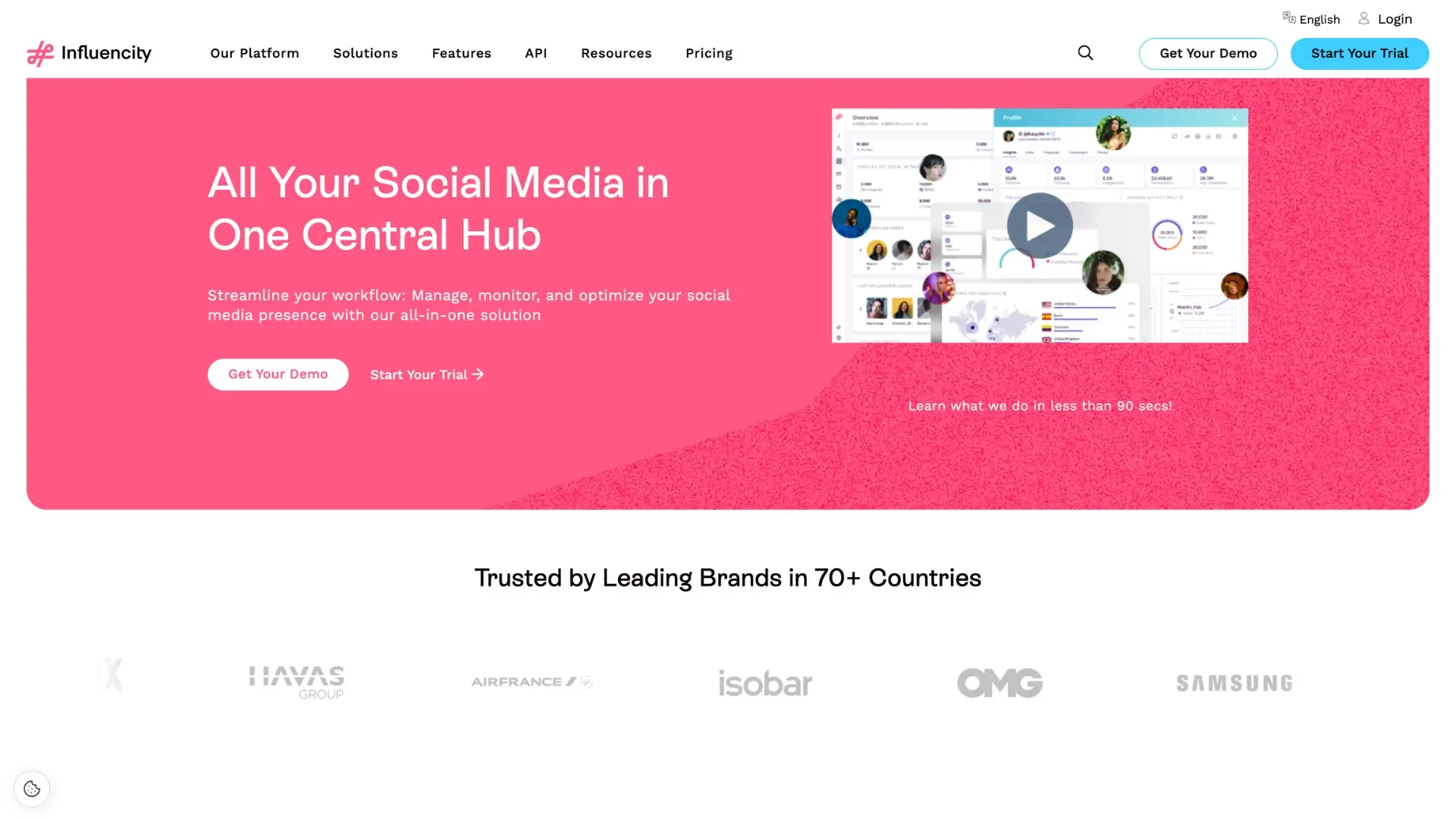
Influencity is a Spanish influencer platform covering discovery and campaign management, social media management, and social listening. They offer audience analytics, relationship management and fake-follower detection. Its audience analysis and cost-prediction tools are a strong point for teams that vet creators carefully before spending.
The company serves over 2,000 users across 30 different countries, from small businesses up to large enterprises, including Havas, Air France, Samsung, Dentsu and IPG.
Discovery and campaign management; social media management; social listening; audience analytics; relationship management; fake-follower detection; cost prediction.
Paid yearly, Discover costs $1,900, Professional costs $3,816 and Business costs $13,420. Contact them for Enterprise plans. They also offer a ‘7-day free trial with no credit card required’.
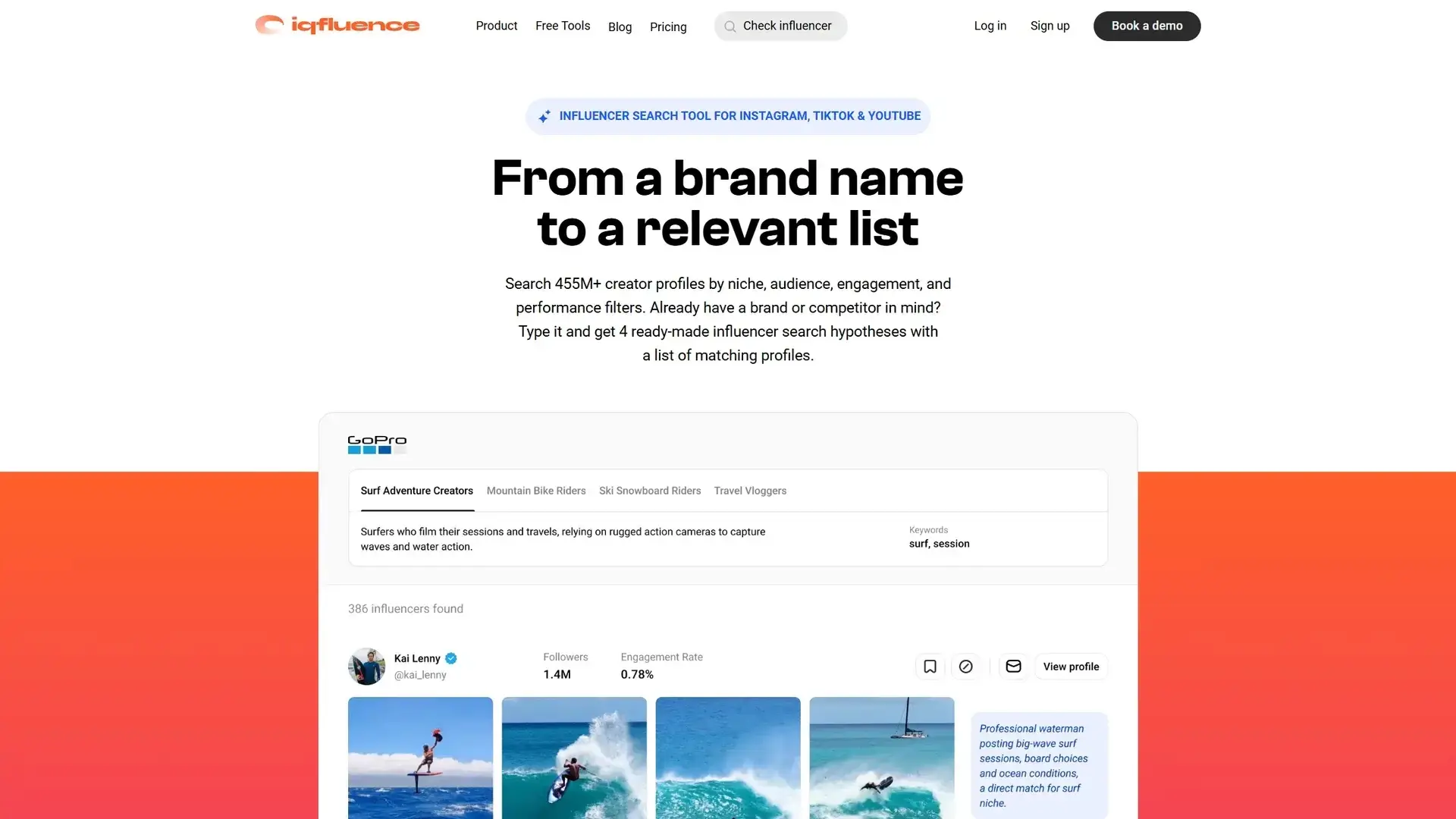
IQFluence is an influencer marketing platform that helps brands and agencies find and vet influencers, reach out to them, run campaigns and monitor results in one workflow. Its database covers 455M+ creator profiles across Instagram, TikTok and YouTube.
With robust filters, marketers can quickly narrow searches by 20+ criteria per social media platform, including location, follower range, engagement rate, and content type. AI search provides ready-made creator collections based on a brand or competitor analysis. MCP integration is also available.
455M+ profiles (IG, TikTok, YouTube); 20+ filter criteria per platform; AI search & ready-made collections; outreach; campaign monitoring; API/CRM; MCP integration.
Paid yearly, Starter costs $236/month, Advanced costs $436/month and Business costs $1,300/month.
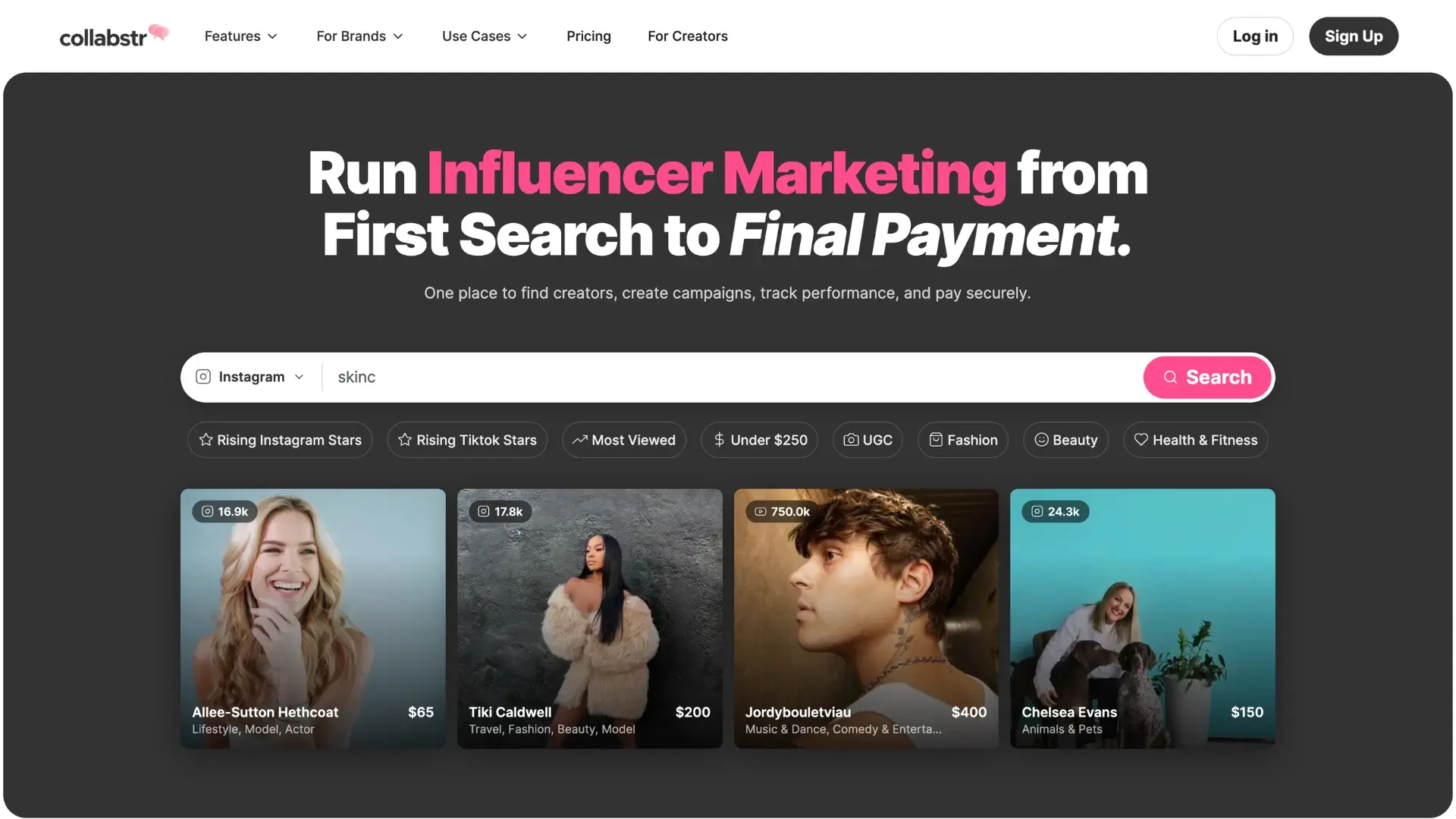
Collabstr is a Canadian influencer marketing platform and self-serve marketplace where brands can hire creators on TikTok, Instagram, and YouTube to produce sponsored posts. It’s designed for simplicity, offering transparent pricing, secure payments, and fast turnaround times.
The platform makes it easy to browse thousands of creators, compare pricing packages, and manage communication and delivery in one dashboard. Collabstr’s built-in escrow system ensures that payments are only released once work is completed, which makes it popular with small and mid-sized teams testing influencer collaborations.
The company serves brands like McDonald’s, Hopper, Wealthsimple, and ClickUp.
Self-serve marketplace (TikTok, IG, YouTube); transparent pricing packages; secure escrow payments; communication & delivery in one dashboard.
Paid yearly, Pro costs $249/month, Premium costs $333/month and Enterprise/Agency costs $1,000/month. They also offer a free plan to start exploring the platform.
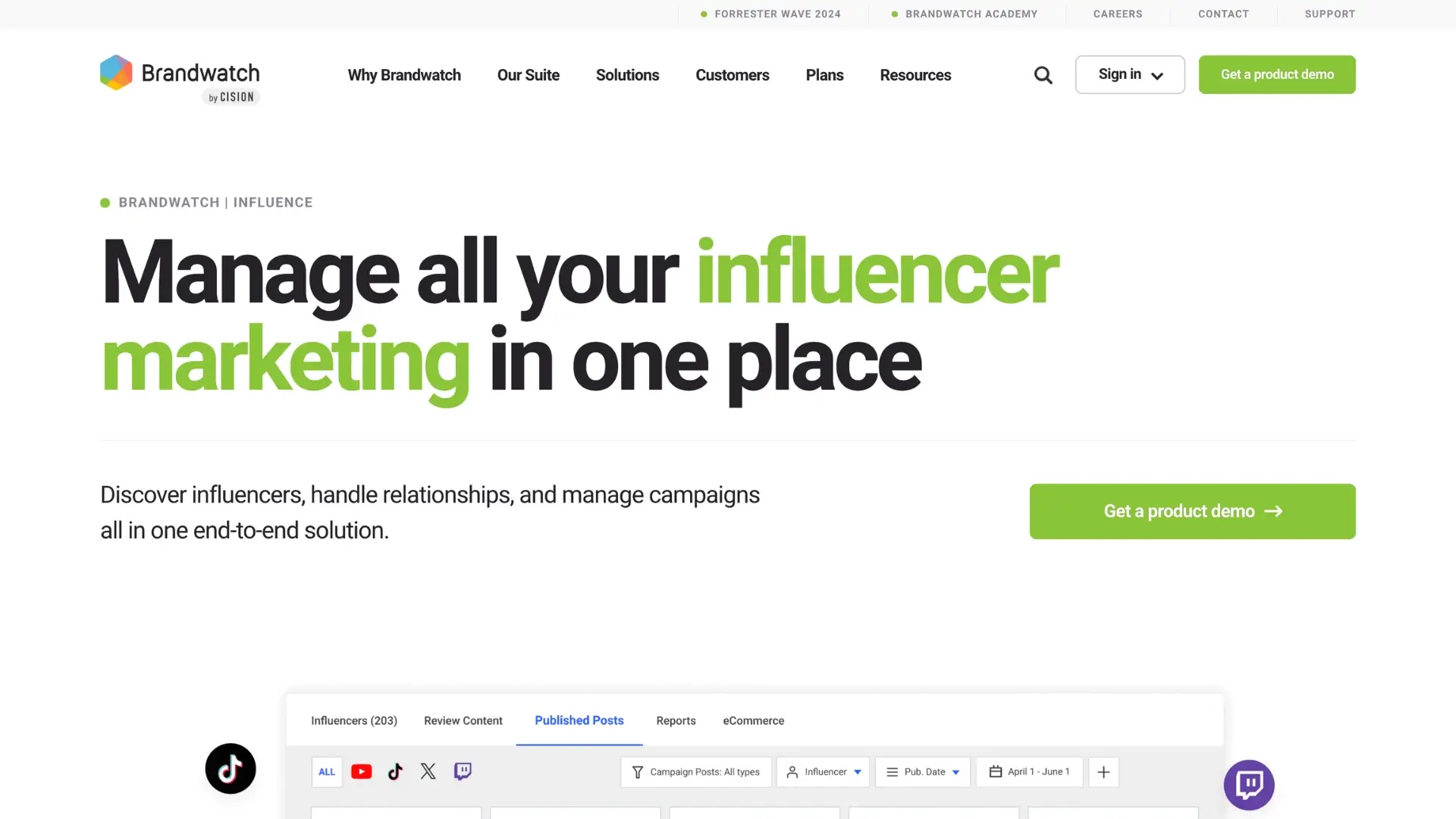
Influence is Brandwatch’s influencer product, built from its acquisition of Paladin and now part of Brandwatch’s wider social and consumer-intelligence suite under Cision. It handles creator discovery, campaign execution and reporting against a database of tens of millions of creators.
Because Influence sits inside a larger listening platform, it fits teams that already live in Brandwatch and want to combine it with consumer intelligence and social media management workflows. The company serves brands like Webedia, The Sociable Society, ATV and Henkel.
Creator discovery, campaign execution, reporting; database of tens of millions of creators; sits inside Brandwatch listening/consumer-intelligence suite under Cision.
Custom. Request a demo to learn more.
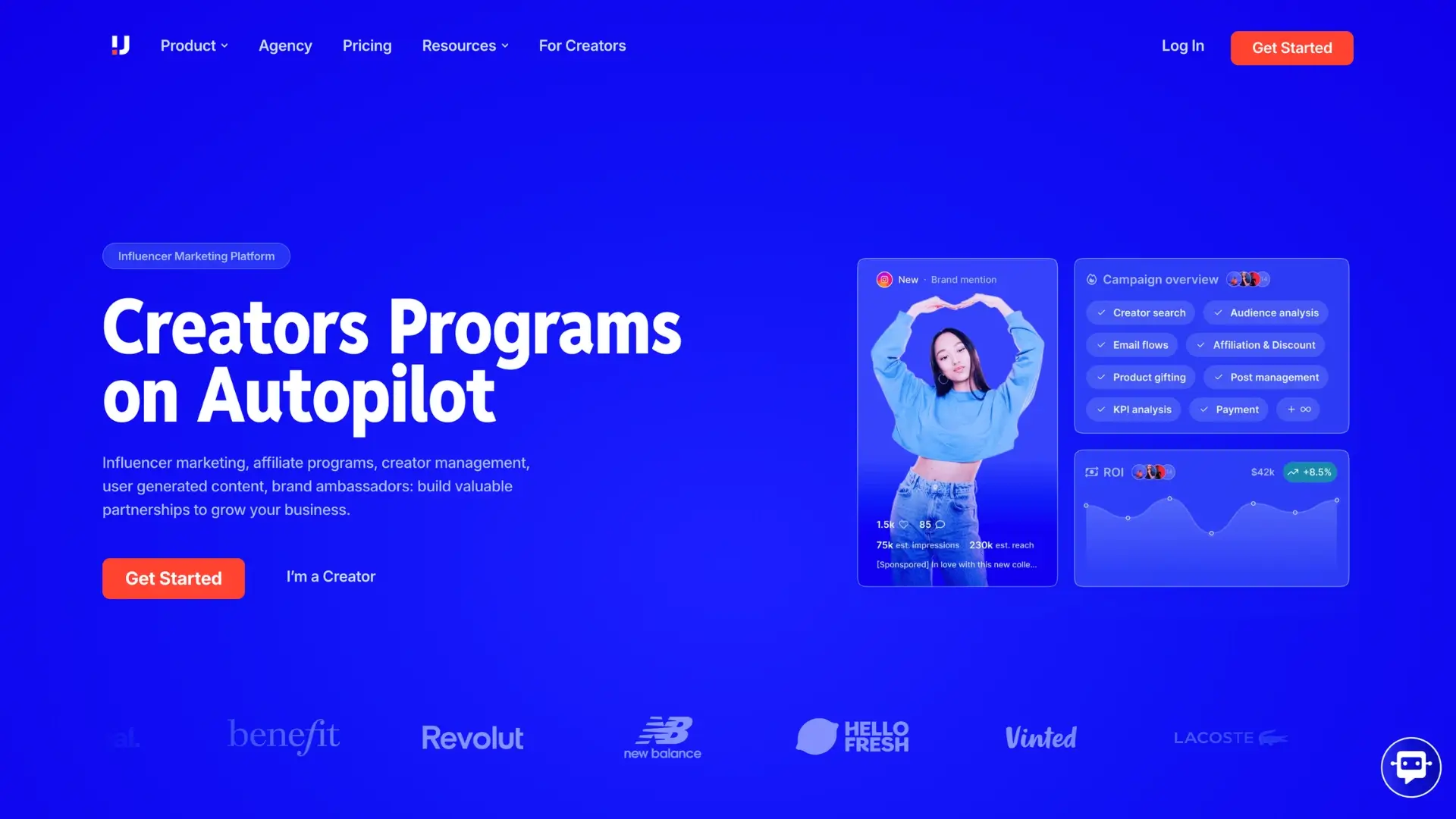
Upfluence is an influencer and affiliate platform built for eCommerce. Founded in Lyon and now based in New York, it serves brands such as Lacoste, Asics, Marriott, Netflix, Verizon, Philips and Clarins.
The platform allows brands to find and attract creators, scale and automate creator partnerships end-to-end, monitor performance, measure ROI and pay creators globally.
Find and attract creators; scale and automate partnerships end-to-end; code and link-based sales tracking; performance monitoring; ROI reporting; global creator payments; native integrations.
Custom. Request a demo to learn more.
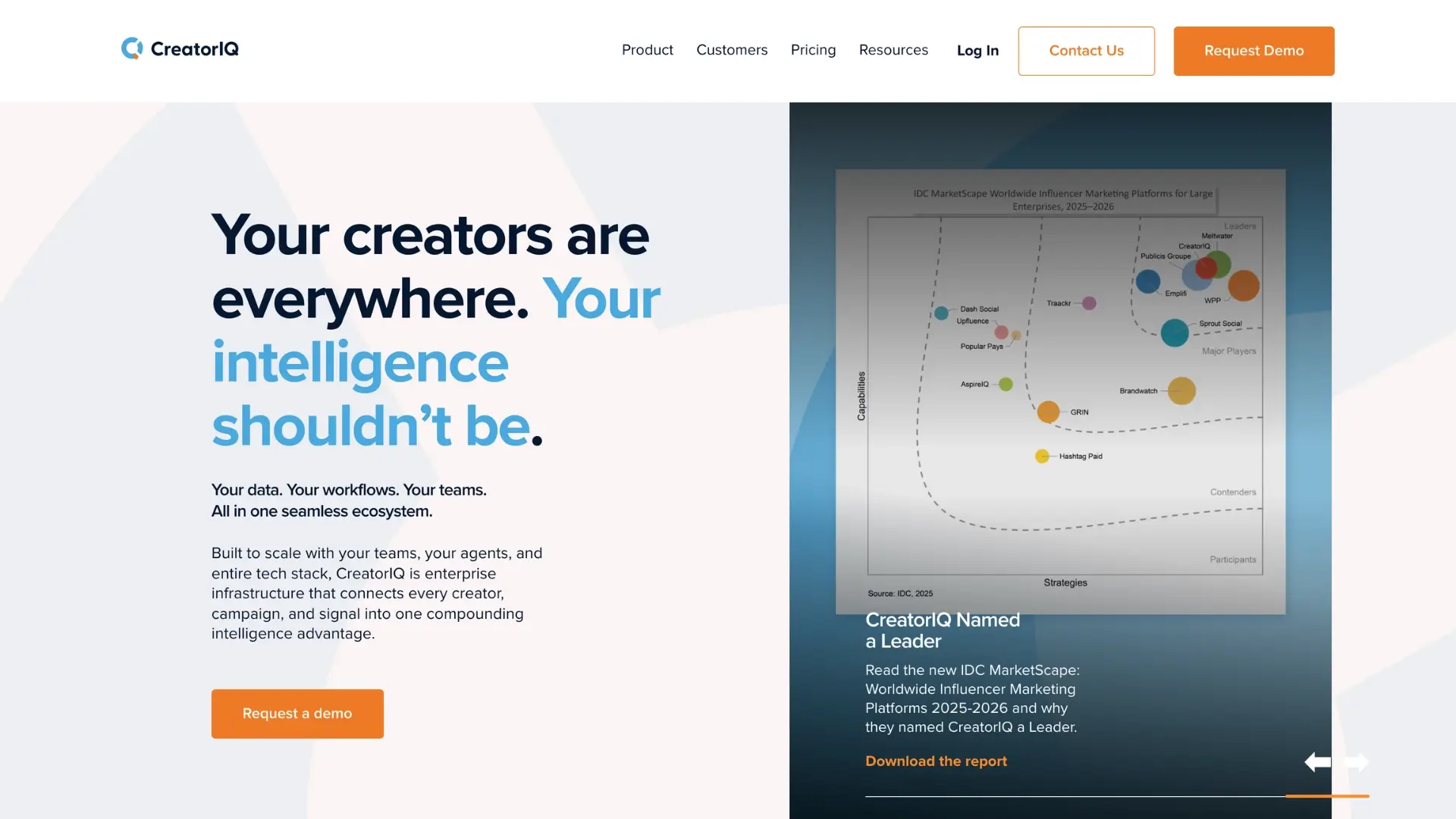
CreatorIQ is an enterprise creator-marketing platform headquartered in the US, focused on discovery, workflow, brand safety and measurement at scale. It is consistently recognised as a leader in enterprise analyst evaluations and is used by large global brands.
CreatorIQ is enterprise infrastructure that connects every creator, campaign, and signal into one compounding intelligence advantage. Its depth comes with enterprise pricing and complexity, so it rarely fits smaller teams.
It serves 1,300 brands and agencies, including Dentsu, Nestlé, Unilever, Google, Beiersdorf, Delta, YETI and Sephora.
Discovery, workflow, brand safety, measurement at scale; API to pipe data into BI tools, data lakes and marketing-mix models.
Custom. Request a demo to learn more.
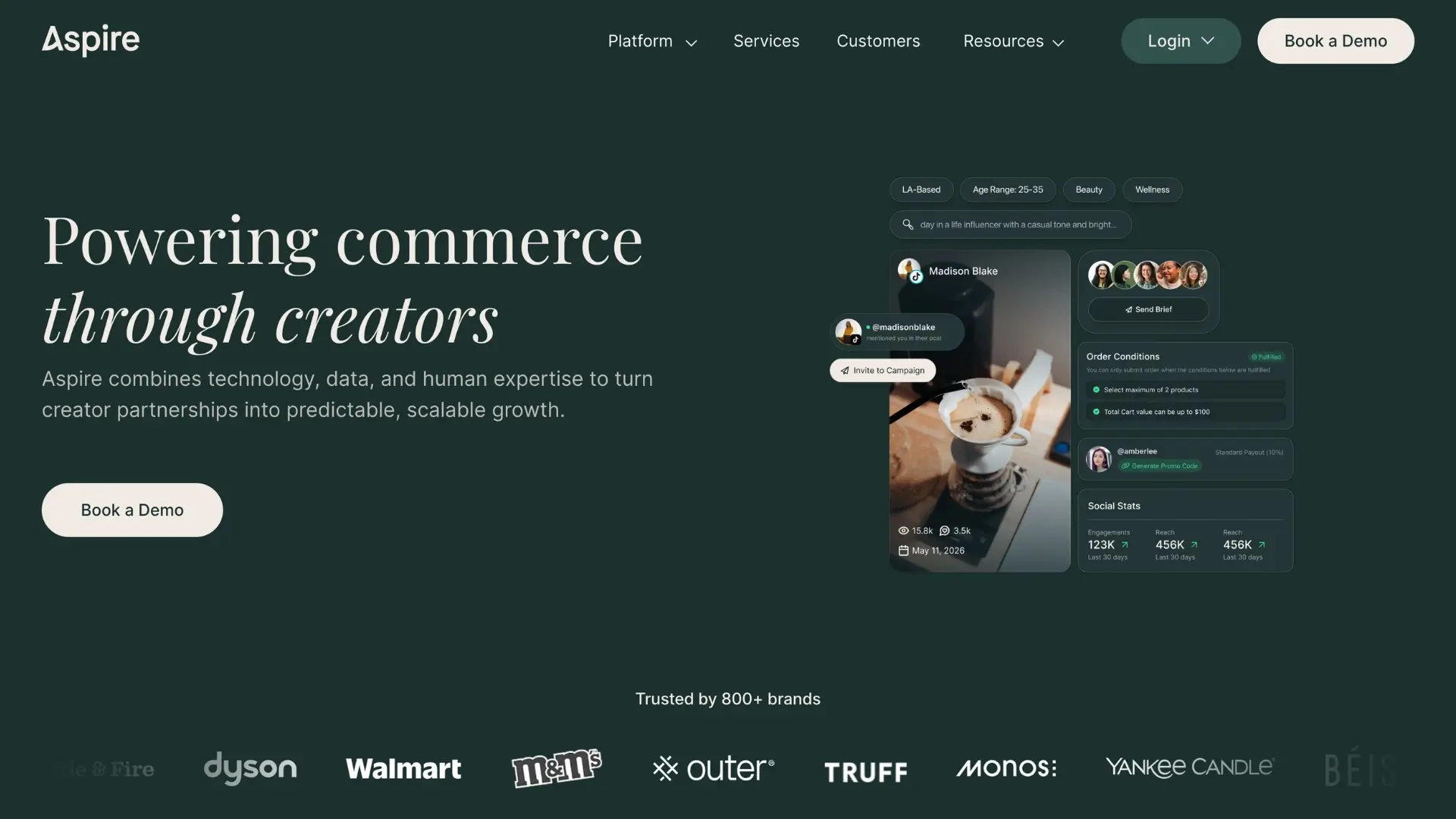
Aspire is a US eCommerce-focused platform with a large opt-in creator marketplace and tools to turn creator content into social ads. It leans toward ambassador and affiliate programs for direct-to-consumer brands like Walmart and TRUFF.
They combine technology, data, and human expertise to support programmes like UGC, ambassadors, affiliates, social commerce, gifting, and seeding.
Large opt-in creator marketplace; turn content into paid social ads (allowlisting, TikTok Spark Ads, Meta Partnership Ads); Shopify/WooCommerce; UGC, ambassadors, affiliates, social commerce, gifting, seeding; optional managed services.
Custom. Request a demo to learn more.
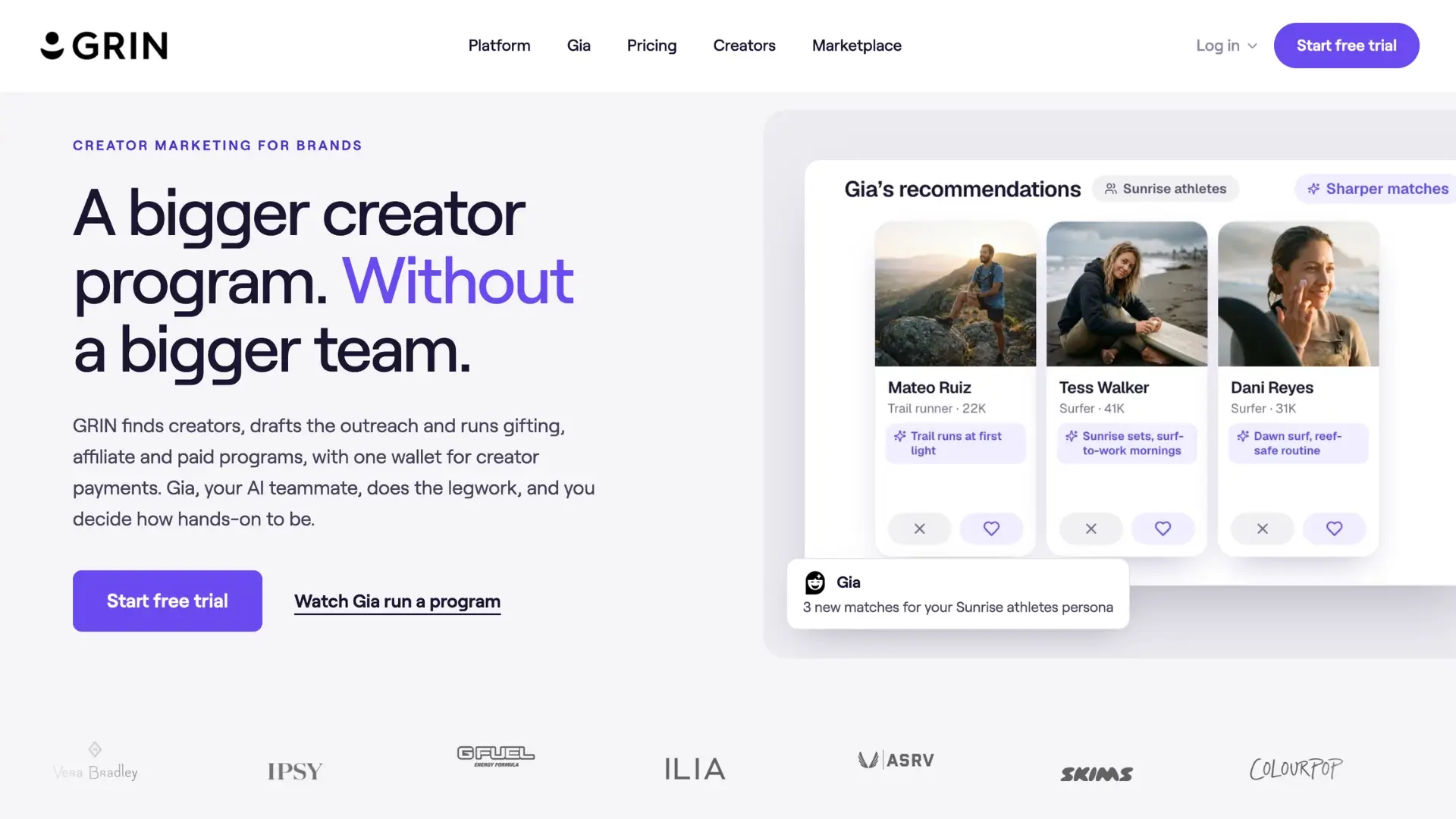
GRIN is a US creator management platform for direct-to-consumer brands, strong on gifting, product seeding and ambassador programs, with tight eCommerce integrations.
It positions itself not as a dashboard you operate, but as an AI that operates it, referring to its AI agent Gia, which handles sourcing, outreach, gifting, reporting, contracts, and workflows. The company serves brands like SKIMS, ColourPop, IPSY, ILIA, Vera Bradley and ASRV.
Gifting, product seeding, ambassador programs; tight eCommerce integrations; AI agent “Gia” handles sourcing, outreach, gifting, reporting, contracts and workflows with human approval.
Starter costs $200/month, Growth costs $500/month and Scale costs $1,500/month. The plans include different management fees on wallet deposits. Contact them for Enterprise plans. They also offer an initial Free plan to try the platform.
JoinBrands is a US self-serve marketplace that helps brands connect with creators, send products, and collect authentic photo and video content. It simplifies content sourcing by bringing creator discovery, briefing, and delivery into one place. The company serves brands such as Mary Ruth’s, Golí Nutrition, TrulyFree Home, Bloom, and Biostime.
JoinBrands focuses on speed and scalability. Brands can post briefs, match with vetted creators, and receive licensed assets ready to reuse across ads, product pages, and social channels. The platform also supports affiliate and TikTok Shop collaborations, making it a good option for brands selling online and looking for measurable results.
Self-serve marketplace; product seeding; briefing and delivery in one place; licensed assets for ads, product pages and social; affiliate and TikTok Shop support.
Paid yearly, Start-up costs $89/month, Pro costs $269/month and Max costs $449/month. All plans include a platform fee. They also offer a free plan to start exploring the platform.
Choosing the right influencer marketing platform depends on your goals, budget, and how your team works. The best fit is the one that makes your influencer program easier to manage and genuinely improves your results.
Before deciding, take time to compare how each platform aligns with your strategy. Look beyond surface features and think about workflow, integrations, and support.
Some brands prioritise discovery, network and data, while others want an all-in-one tool that also handles UGC, ratings and reviews. Check out our article on Flowbox alternatives for a detailed comparison of the three products.
Where a platform is based shapes data residency, GDPR posture, and how well the tool understands local advertising rules.
European platforms like Flowbox, Kolsquare, Modash, and Influencity process creator and audience data under EU jurisdiction, and several build in compliance scoring for national ad regulators. US-headquartered tools can serve European brands well, but data handling and local rule coverage become questions to raise in procurement.
The most common mistakes when choosing an influencer marketing platform to partner with are:
There is no single best influencer marketing platform, only the one that matches how you sell and where you operate.
For eCommerce and DTC brands that want to combine the influencer content and customer content workflows, the differentiator is reuse: turning a creator post into a shoppable gallery, an ad and an email to boost the content ROI, all from one dashboard. That is the gap Flowbox was built to close.
Request a demo with Flowbox to build and scale your influencer marketing strategy cost-effectively.
An influencer marketing platform is software that helps brands plan, run and measure their influencer campaigns and long-term collaborations with creators.
Most platforms offer influencer discovery, plus tools for outreach, briefs, contracts, rights requests, payment handling, and analytics that tie activity to performance and results. A few include a vetted creator pool.
Agencies suit brands that need strategy, creative and execution without adding headcount. They bring expertise and bandwidth but can cost more and give less day-to-day visibility. Platforms suit teams that want control, transparency and in-house speed while building capability. Many brands use both: agency for major launches, platform for always-on programmes and reporting.
Good platforms use built-in fraud detection workflows or tools to spot fake followers and inflated engagement. They analyse audience quality, flag sudden spikes or bot-like patterns, and compare engagement to follower size. Some verify creator identities and track audience changes over time. These checks help brands invest in creators with real influence and genuine reach.
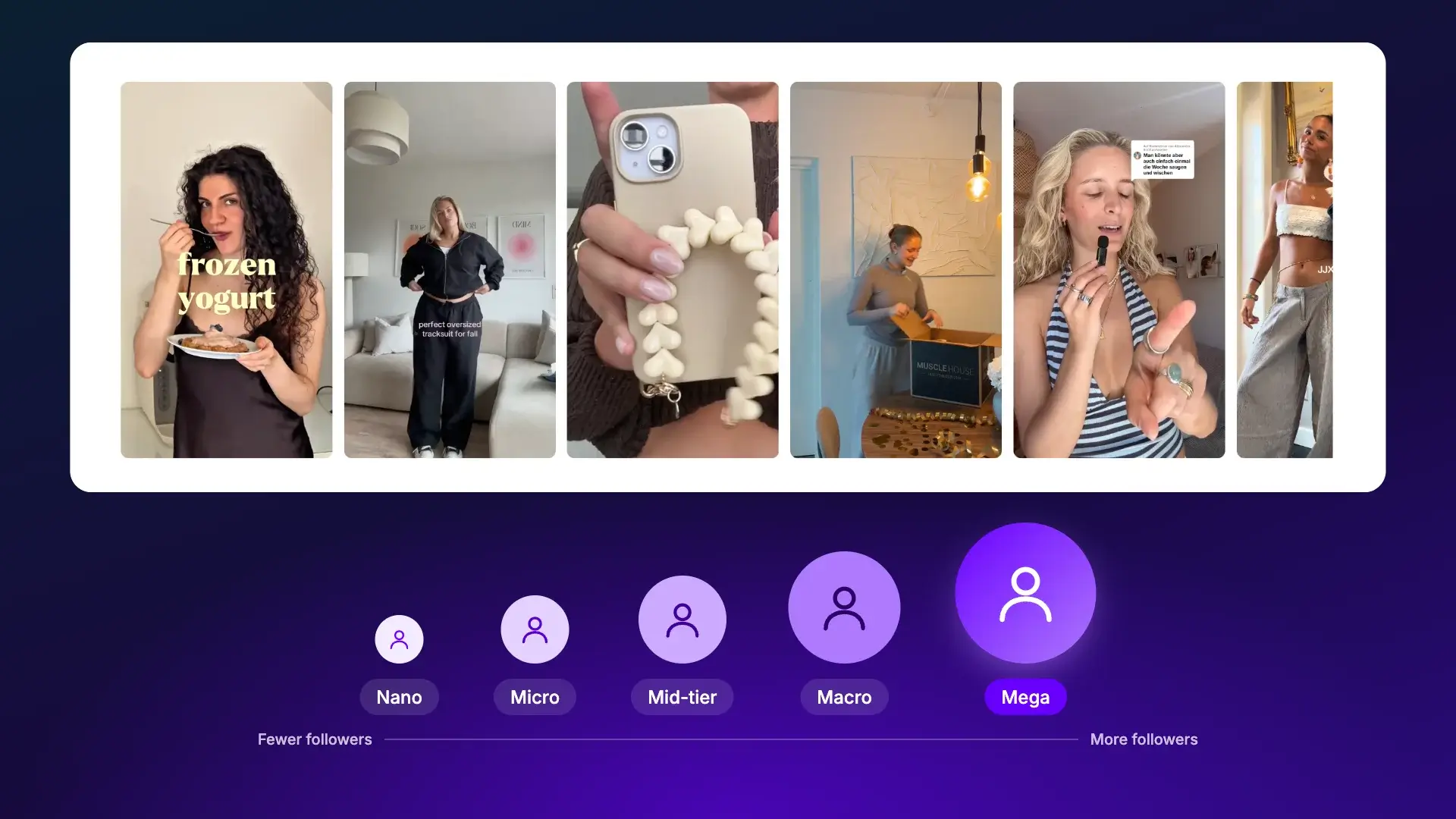
Yes. Many influencer marketing platforms offer affordable plans for smaller brands. They cover essentials like creator discovery, outreach and campaign management. Small and local brands often see great results by partnering with micro or nano creators. These creators have highly engaged communities and strong local trust that drives real impact.
Pricing splits into two models. Self-serve tools publish plans, usually from around $1,200 to $5,500 per year depending on seats and search volume, and often include a free trial. Enterprise and all-in-one platforms such as Flowbox, Kolsquare, Upfluence and CreatorIQ use custom pricing behind a demo. When you compare, check transaction fees, creator-payment handling and the cost of extra seats or analytics, not just the headline plan.
Many do. The stronger ones pay creators in-platform, often in multiple currencies, and track discount codes and commissions. For brands paying creators in the EU, look for DAC7 reporting, which EU platform operators are required to collect and file. Flowbox, as an EU operator, handles DAC7 reporting for payouts made through it.
The best influencer marketing platforms connect a creator post to a sale, not just to views. They do this with UTM links, unique discount codes and affiliate tracking, and several sync with Shopify so orders and revenue line up automatically. For eCommerce brands, the fuller picture also counts content reuse, since repurposing a post into ads, email and on-site galleries lifts the return well beyond the original post.
European brands often start with Kolsquare, Modash, Influencity or Flowbox, which process creator and audience data under EU jurisdiction and understand local advertising rules. Headquarters affects GDPR posture and data residency, so it is worth raising in procurement. US-based tools can still serve European brands well, but data handling and local-rule coverage are the questions to confirm first.
An influencer marketing platform runs the full campaign workflow, from discovery and briefing through to payments and reporting, and is built for ongoing programs. A creator marketplace is a lighter, self-serve tool where you hire a creator for a single order, and the creator does not always post to their own audience. Marketplaces suit quick, one-off content, while platforms suit brands scaling repeatable campaigns.